
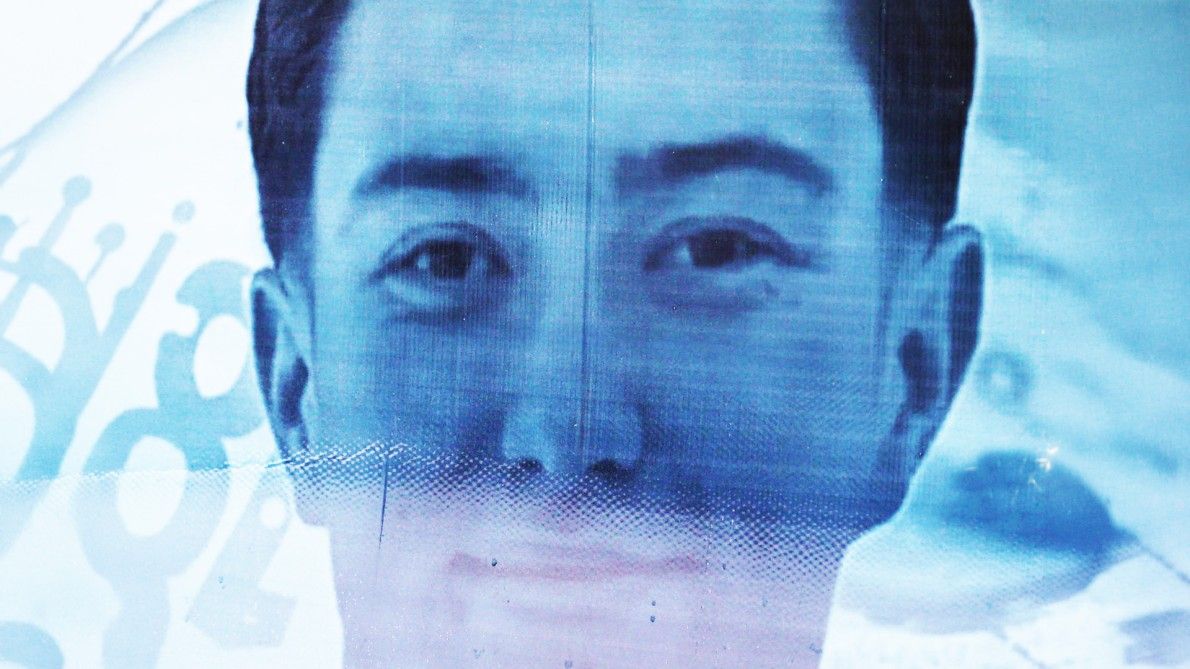

In the moral after-management of a crime, even the knife might yet appear as an allegory of intercultural open-mindedness: it knew neither origin nor age nor sex. It did what knives do when people lend them their will. Without distinction of persons. Only then did the violence of language begin: talk of misunderstandings, isolated incidents, hurt feelings, exceptional circumstances in religious politics, and the vocabulary of diversity.
Henry Nowak had asked for neither essays on religion nor colloquia on diversity nor sweeping debates about immigration, integration and religious unease. He wanted to live. That is precisely why his murder forces this debate upon us. The force of fact takes no account of the questions a society postpones out of fear of itself.
Among the peculiar weaknesses of the modern West is its tendency to take everything that presents itself as religious equally seriously as religion: symbols, rites, vestments, dietary rules, codes of conduct and notions of honour — all are placed under the same gentle protection of freedom of religion and conscience. Here, too, the error takes root. European religious freedom is a fruit of Europe’s Christian confessional history, born amid the tensions of war, blade and crown. It is the product of the bitter recognition that the state must not determine the salvation of the soul. From Augsburg in 1555 to Westphalia in 1648, religious peace was never a poetic celebration of religious diversity, but an emergency architecture erected in the wake of bloodshed. Historically speaking, it did not initially mean the state’s surrender before every sacred gesture. It meant disarming religious civil war through the rule of law.
Modern religious freedom was thus established not out of faith in religion’s harmlessness, but because religion threatened to tear the body politic apart. Religious freedom is the form in which religion was permitted to survive politically once its power over punishment, war and public sovereignty had been stripped away. It is the peace treaty after catastrophe. That is why religious freedom becomes so dangerous when extended to sacred orders that have undergone this political disarmament only partially, or not at all.
The European state today treats every sacred gesture as though it had already travelled that long road of purification through confessional wars, secularisation and the struggle over the monopoly on force. It sees a religion and overlooks the legal order still operative within it. It sees a profession of faith and overlooks the political claims that exceed it. It sees a symbol and overlooks its power to threaten. It grants freedom where it should first demand submission to the law that applies to all, instead of submitting itself.
Sikh MPs in Britain, in particular, have insisted that the murder weapon was not a kirpan but a conventional offensive weapon, and that religious motives for the killing could be ruled out. Yet this necessary clarification reveals the very problem: an order that must first explain when a blade is still a symbol of faith and when it has become an instrument of intimidation no longer carries the conflict between private religious freedom and public safety at its margins, but at the heart of its hollowed-out foundational concepts.
In Britain’s Criminal Justice Act, the phrase religious reasons does indeed appear as a possible defence for carrying certain bladed articles. Why should the sacred count as an exculpatory category precisely where the state must fulfil its most basic duty — public safety? Even the language of human rights recognises this distinction: belief is free; its outward expression may be restricted where public safety, public order and the rights of others are at stake.
Perhaps this is the West’s central self-deception: it believes every religion is private simply because it has confined its own religion to the inward realm. It takes other sacred orders to be variants of those domesticated confessions with which it has historically made peace. Yet not every religion that immigrates into the liberal state arrives as religion in the liberal sense. Religious freedom was never a licence to establish a rival order alongside the state and undermine its monopoly on force. It was no blank cheque for special legal privileges, no capitulation to premodern codes of honour, no authorisation to develop parallel systems of punishment and violence. It protected conscience, not violence; the amen, not the state of exception.
Yet this freedom now encounters religious and cultural formations that do not always fit neatly into the categories from which European liberalism derived its own concepts. Where the West today says “religion”, a social order may also be at stake. Where it sees “tradition”, a code of honour may still be at work. Where it hears a “profession of faith”, a claim to allegiance may resonate. They have eyes and do not see; they have ears and do not hear. The rebellious house recognises reality only when it bleeds (Ezekiel 12:2).
This is the unguarded point in a society that, for fear of appearing intolerant, has forgotten how to distinguish. The distinction would be simple: faith, yes; special legal privileges, no. Worship, yes; a religious exemption for carrying weapons, no. A profession of faith, yes; a climate of intimidation, no. Here lies the dignity of religious freedom. It is not sentimentality, but a form. And like every form, it lives by its boundaries. Without boundaries, it becomes not more generous, but devoid of substance. Without boundaries, freedom turns into protection for insular communities, that protection into special status, and special status into the state’s quiet abdication before an order that reads its restraint as weakness rather than virtue. Perhaps the erosion of an order begins not when it underestimates rival claims to authority. Perhaps it begins when it no longer understands its own concepts. Religion, culture, law, violence, tolerance — all still stand like the colossus of a late empire, its head gleaming, its feet of clay. And perhaps the very tone of society betrays how brittle its foundations have become — coarse and cracked. A civilisation rarely breaks first under the blows of its enemies.
Nur der Tote bleibt als letzter Realist. An ihm endet die Pazifizierung und Schonung. An ihm scheitert die Sprache, die alles verwalten will und nichts mehr beim Namen nennt.
Henry Nowak is not an argument, but a human being. Precisely for that reason, his death must not disappear into the padding of sensitivity, buck-passing and susceptibility to moral blackmail with which the West cushions its defeats. Those who cease to distinguish for fear of seeming harsh do not become more humane in the end. They merely become less capable of defending humanity. The dead man is therefore more than the victim of a crime. He marks the moment when reality breaks through false concepts. With him, the grammar of appeasement ends. The body contradicts the theory. The blood refutes the reporting. What previously appeared as diversity, sensitivity, religious particularity or rhetoric about intercultural complexity suddenly becomes physical and elemental once more: one human being wanted to live; another put an end to that will; the state must explain why it is so often quicker to protect sensitivities than to acknowledge reality.
Perhaps the victim is the final authority in a late-liberal order that has disarmed itself. Not because he can still act, but because he no longer enters into the bargaining of concepts. He stands outside the background noise of day-to-day politics. The dead man does not lie. He is the silent testimony before which all appeasement falls silent. And perhaps judgement begins not with the words of the living, but with the silence of those who will never return.