
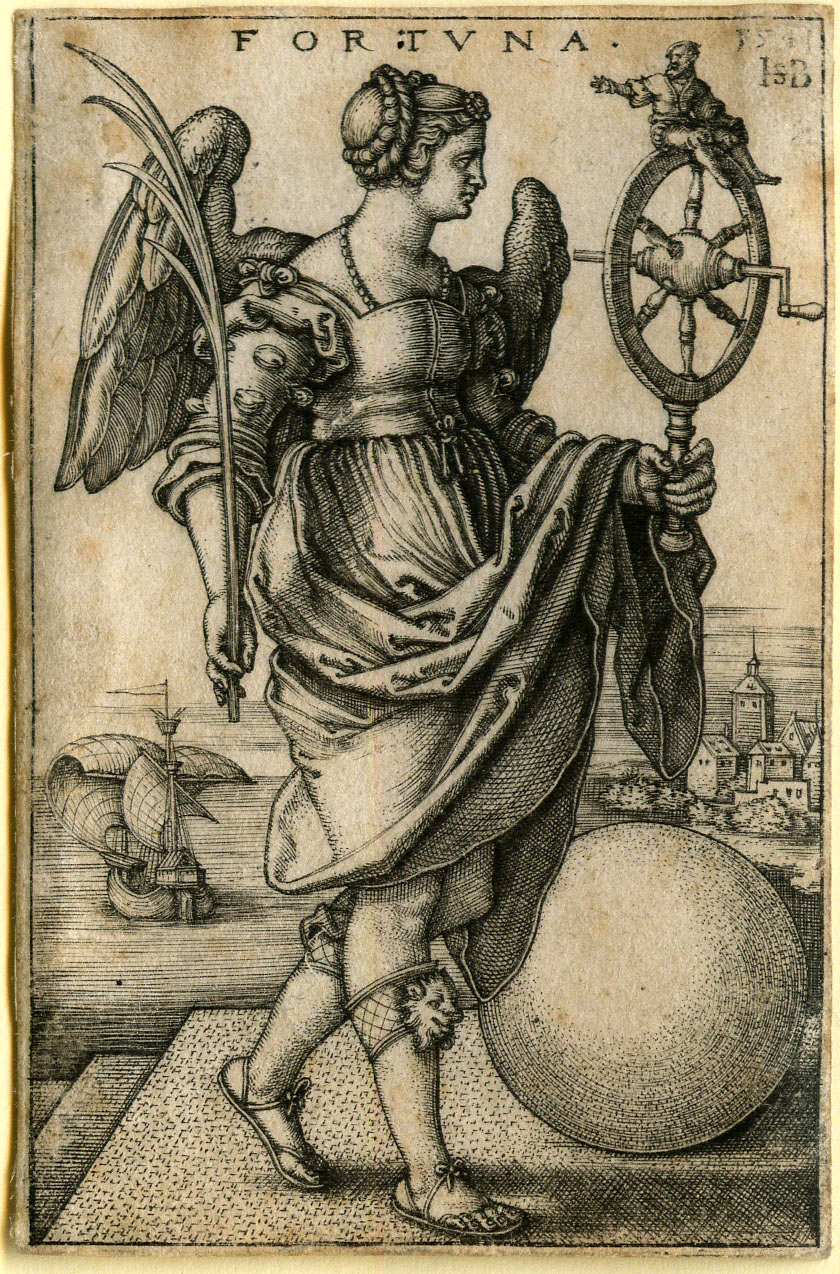

O Fortuna
velut luna
statu variabilis,
semper crescis
aut decrescis;
vita detestabilis
nunc obdurat
et tunc curat
ludo mentis aciem,
egestatem,
potestatem
dissolvit ut glaciem.
O Fortuna,
Like the moon,
Your realm is changeable And cold.
First the waxing,
Then the fall;
Hateful life besets us all.
First indulged
And then abused,
Fortune quickly turns to grief,
Power brings only suffering,
Poverty only scorn,
Like melting ice—no recompense remains.
I. Chthonica et Philosophica
I.1. Radicalica
Our paths through life are the new shoots of genealogical branches and lines of force driven by our forebears in their erratic urge towards the light. Today we grow along the courses their tentative striving created as a firm framework for us. The trajectories of the future seem predetermined: no future without a past. The circumstances into which each person is born determine the point of entry into life. They arise from the God-given clay, the bed of earth into which we are born. From that point, it falls to each of us to knead this raw material with our own hands and wrest from it the form called “life”.
From the silence of dirt and earth, man was created, and the breath of the Most High entered his bones. He is only a wanderer through the fields of time, a guest given existence as a place of trial until the earth reclaims its own and he falls home to dust, becoming what he was before the beginning: Nothing.
I.2. Continuica
Firmly rooted in the heavy ground of the ancestors from which we all sprout, he resists time’s deception. Those who remain conscious of their origins and family can preserve an inner independence rather than bowing to the present’s illusions. Origins provide orientation, though they confer no entitlements. Genealogy becomes a question of sovereignty over one’s own life.
It is therefore unsurprising that Greek antiquity could express what modern people have entirely lost in their rootlessness: an intuitively grasped connection between earth, death and fertility. In the earth lies the source of life; in the earth, too, its end. Only recognising this indivisible unity saves individual existence from uprooting and makes it comprehensible as a necessary link in an eternal chain of renewal. Continuation takes many forms: biological, cultural, social and intellectual.
II. Methodica et Biologica
The nature of “family” eludes any single discipline’s claim to authority. We know the biological kin group as the carrier of genetic inheritance; the social community as a circle of reciprocal duty and care; the legal unit as a community of need often subsidised by the state and rarely sanctioned; and finally the narrative family, of which shame or repression allows us to speak only quietly, sometimes not at all.
II.1. Genetica
In light of these facets, great-great-grandparents appear almost an anthropological boundary. Beyond this Rubicon, the ancestral image dissolves into the intangible: no figure with a face, no anecdote, no trace in transgenerational family memory. Thereafter, ancestral lines merge into the temporal currents of eras flowing back into the sea of human history.
An ancestor’s genetic contribution halves exponentially with each generation. After only seven or eight generations, the genetic trace of an ancestor scarcely amounts to a tenth of a per cent. Even if we achieve something significant and leave our descendants a rich inheritance in history’s relay—a business, a bibliography or a reputation—its effect remains finite. The echo of the cry of life we send into the future fades almost entirely after just a few generations. A span of two to four generations is most plausible for the inheritance of familiar facial features. Within this narrow window, genetic contributions remain concentrated enough to emerge physically and physiognomically before fading into evolutionary background noise. Traits and inclinations are more fleeting and volatile still. What remains of us?
II.2. Anthropologica
A late-autumn walk through Berlin’s Jewish cemetery, one of the largest of its kind, made this certainty clear once again in the sight of countless family tombs of industrialists, scholars and artists: they extend across three, at most four generations. Thereafter, burials become rare because the “family as an institution of memory” dissolves. Descendants establish families of their own, and new units emerge. The memorial fabric loosens; threads break or are pulled from the weave of the parental home by the drive for independence. New weddings, households and moves. Migration, flight or expulsion again. Then divorce, divided inheritances or discord, career obsession and apathy towards the past—in short, life.
III. Historica et Dynamica
III.1. Retrospectiva
The wheel of fortune turns ceaselessly and capriciously. Those below rise rapidly. It is an irony of fate that equally honest work can lead to opposite outcomes, as my own family history shows. In the new Soviet Russia, the expropriation of prosperous farmers (“dekulakisation”) and deportation to labour camps or collective farms stood diametrically opposed to the rise of yesterday’s day labourers into officials. Fortuna reshuffled the post-tsarist order in a kind of revaluation of all values. Where the family gained access to education, an awareness of material carriers of memory remained. Where illiteracy and hard labour shaped life, oral tradition could often salvage only biographical fragments. For many, surviving the twentieth century meant purchasing continued physical existence through conformity. In numerous cases, the chain broke: language, culture and customs were no longer passed to the next generation.
Russification affected the smaller peoples. The identity of the Volga Finns was gradually displaced, and a piece of history disappeared with it. My Volga Finnic great-grandmother probably forbade her husband, out of fear, to speak their mother tongue with the children. Married while still a minor to escape expropriation and deportation, she did not want to attract attention. Russification did not spare Ashkenazi names either. “Herschel” first became “Gersh” and later “Grigori”; “Wulf” became “Vladimir”. The name becomes a site of compromise between life and the system.
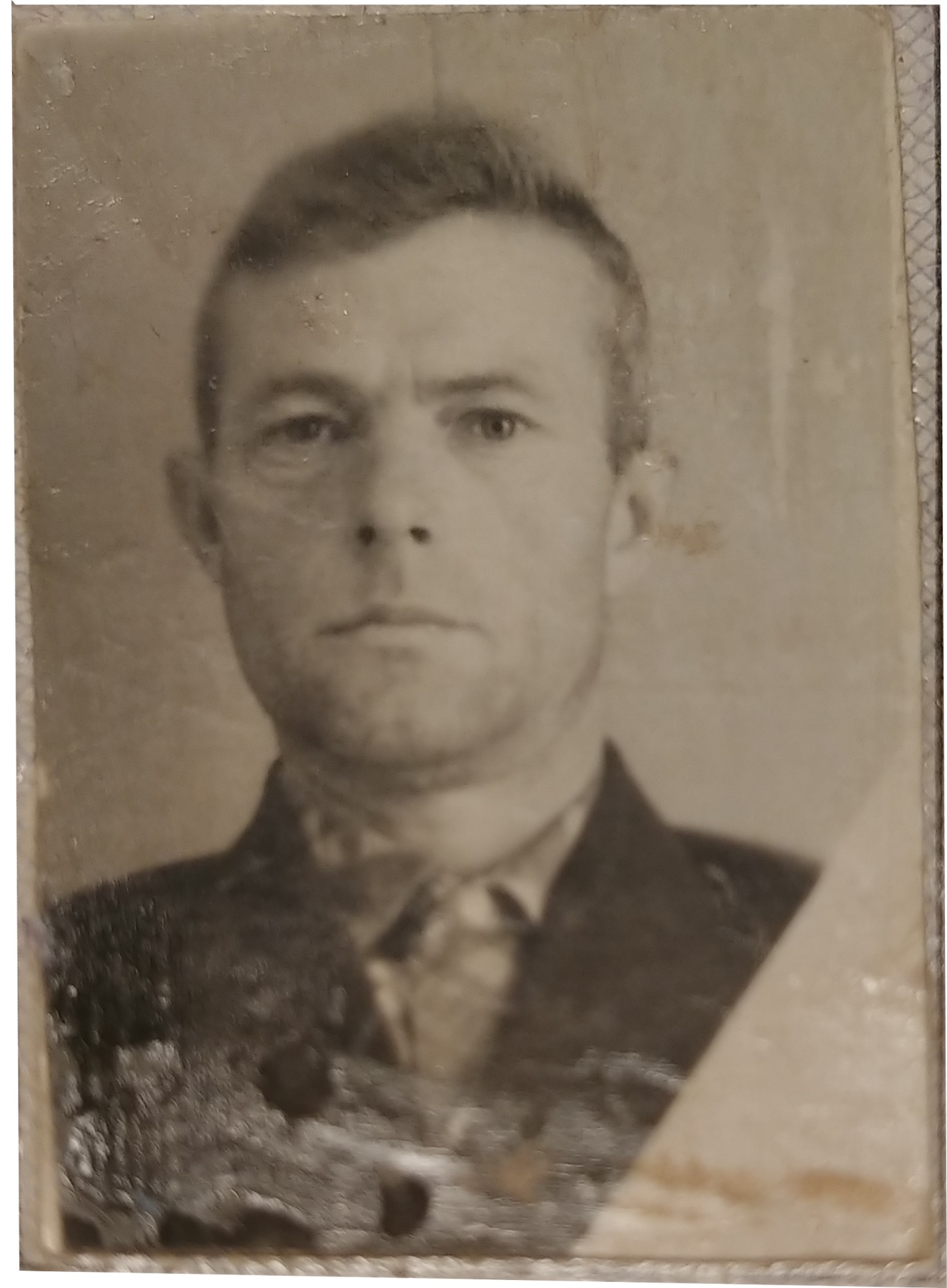
War was another mechanism of forgetting and disappearance, rarely stopping at individual destinies. Someone fell and vanished; someone survived and fell silent. Evacuations act as fateful displacements of people and things, often without any possibility of returning to the old house, old albums or old names. Only bare survival counted. What remained were a few marks on an otherwise blank sheet. My great-grandfather wanted to tell nothing, had his medals given away and left little more than a rescued document. This is not a “character trait”, but a form of survival when memory becomes too heavy.
It also explains a generational difference visible in ways of living. My great-grandparents, who lived through the 1930s and 1940s, were often harder, more withdrawn and quieter. My grandparents frequently wanted nothing to do with war, poverty and fear. My parents consequently describe their childhood and youth as growing up in a vacuum with little memory. It was not only war that devoured remembrance, but also post-war life, in which preserving family history was rarely regarded as valuable.
III.2. Prospectiva
In the 1990s, Fortuna turned the wheel again. Familiar institutions vanished; occupations no longer guaranteed security; money lost value and connections became still more decisive. History neither restarts in 1945 at “zero hour” nor ends in 1991, as Francis Fukuyama claimed; the wheel of fortune keeps turning. My family’s move to Germany is therefore no finale, but follows the trajectories my parents forced into history’s wind with the tremendous lifting power of their not always easy lives. It continues lines of migration and flight, changes of language and name, adaptation and loss. Germany was a rock of stability amid the breakers for my family. At the same time, it is a return westwards from the Volga’s forest-steppe to the water-rich lowlands of the glacial valleys, where Germanic, Slavic, Baltic and Ashkenazi lines have always flowed together.
Genealogy serves remembrance. It gives names to history; often a name is all that remains in registers and archives. Archival work commits itself to documentary precision and freedom of expression, drawing living memory from the silence of mountains of files. Name by name. That is also the name of the project that will take shape here over the coming months…
Ahead of me lie marriages or divorces, children or loneliness in old age: new names, new branches, a history continually expanding. The end of these notes is neither tragic nor triumphant. They are a snapshot, no palm-leaf library of eternal registers. They are an instrument for continuing to write.
Sors salutis
et virtutis
michi nunc contraria,
est affectus
et defectus
semper in angaria.
Hac in hora
sine mora
corde pulsum tangite;
quod per sortem
sternit fortem, mecum omnes plangite!
The lot of salvation,
The path of virtue,
Have fled the years of my youth.
Whether strength of will
Or feeble pleading:
All will perish in servitude.
So touch the strings without delay,
Awake from dreams of destiny!
They strike the strong down too
And bend his proud limbs low.
Fate breaks the strongest courage;
Join in the lament with burning anger!
Grant me mercy, power of fate,
Bring this wandering to an end!
Let your wheel stand still in kindness,
Let the page turn anew for me.
Further chapters of this genealogical project will follow…
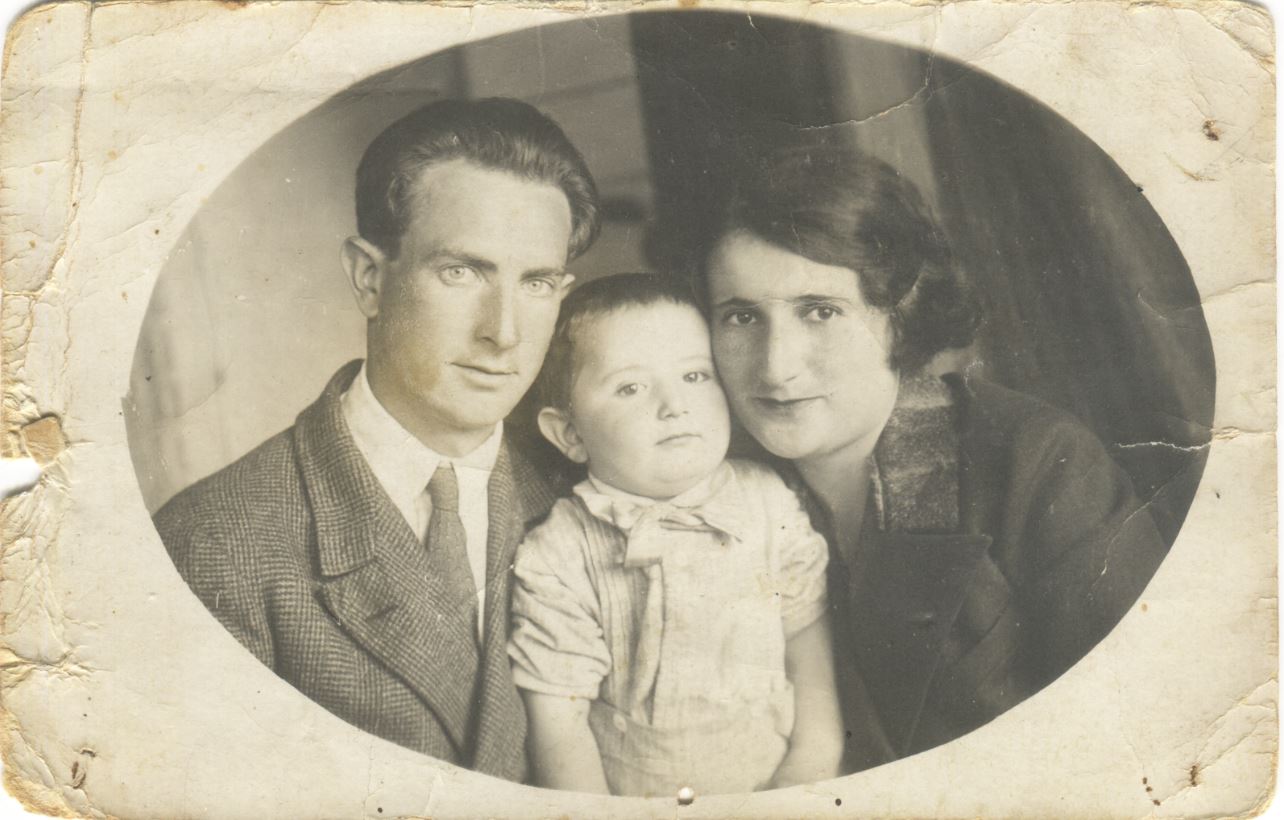
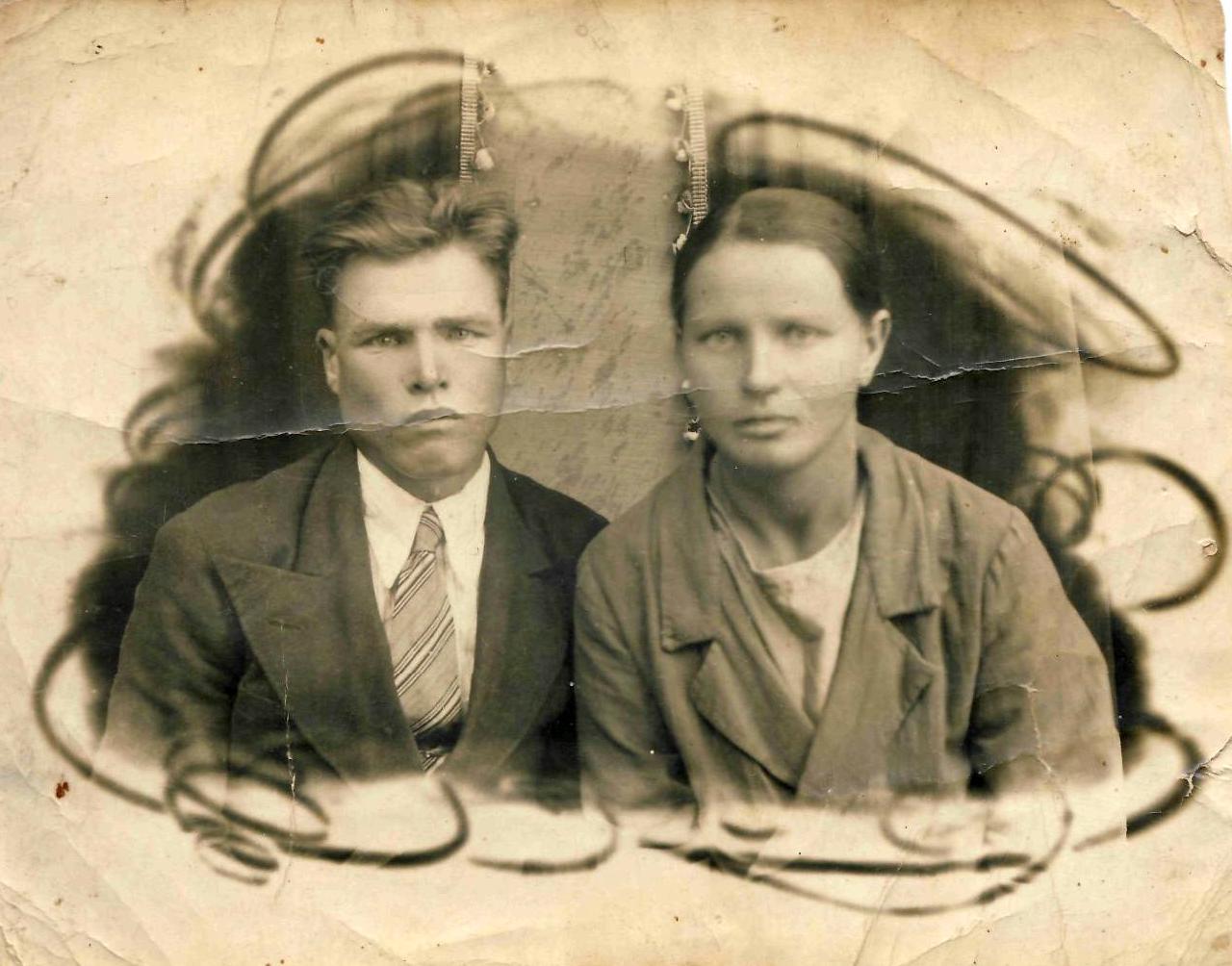
To be continued…
Kolosov Gavrilov
Volga Finns
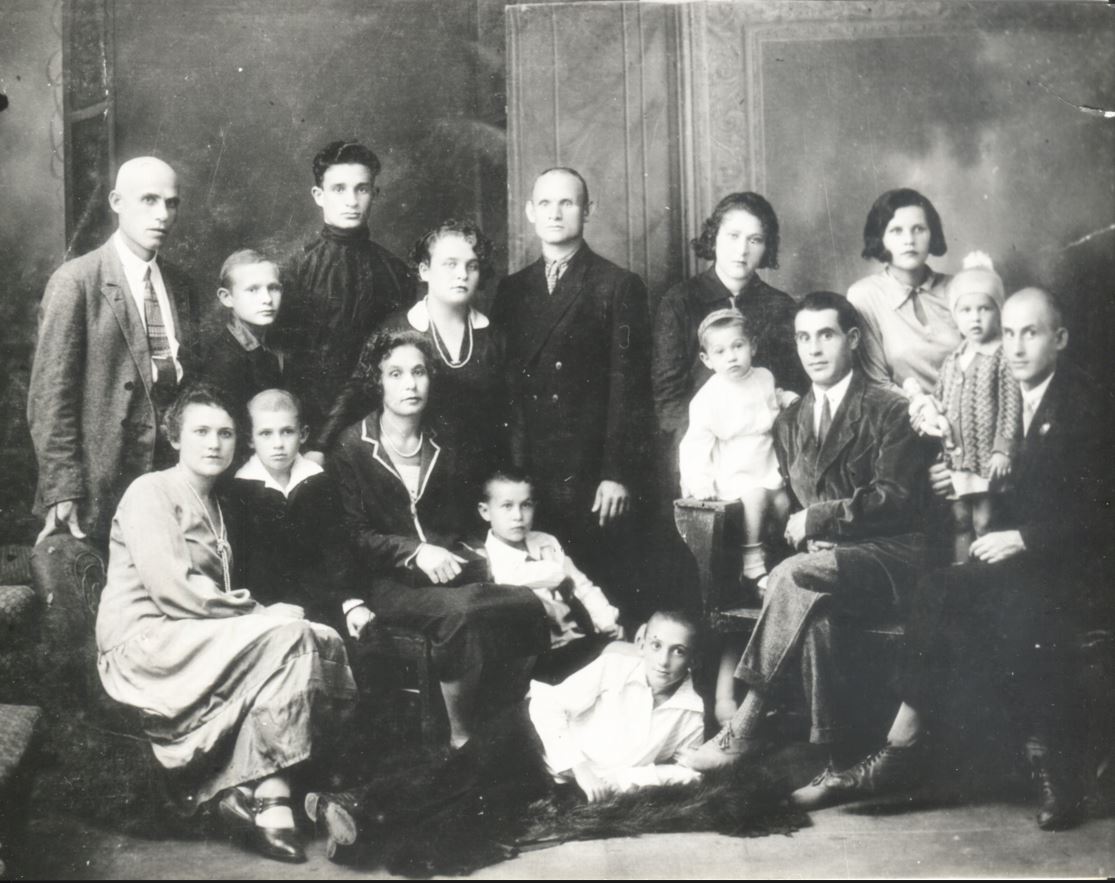
To be continued…
Gleyzer Czerniak Kogan
Ashkenazim
To be continued…
Shakhov Sitnikov
Russians