Nikolaus Bernau in Deutschlandfunk on the reconstruction plans of the Fraenkelufer Synagogue
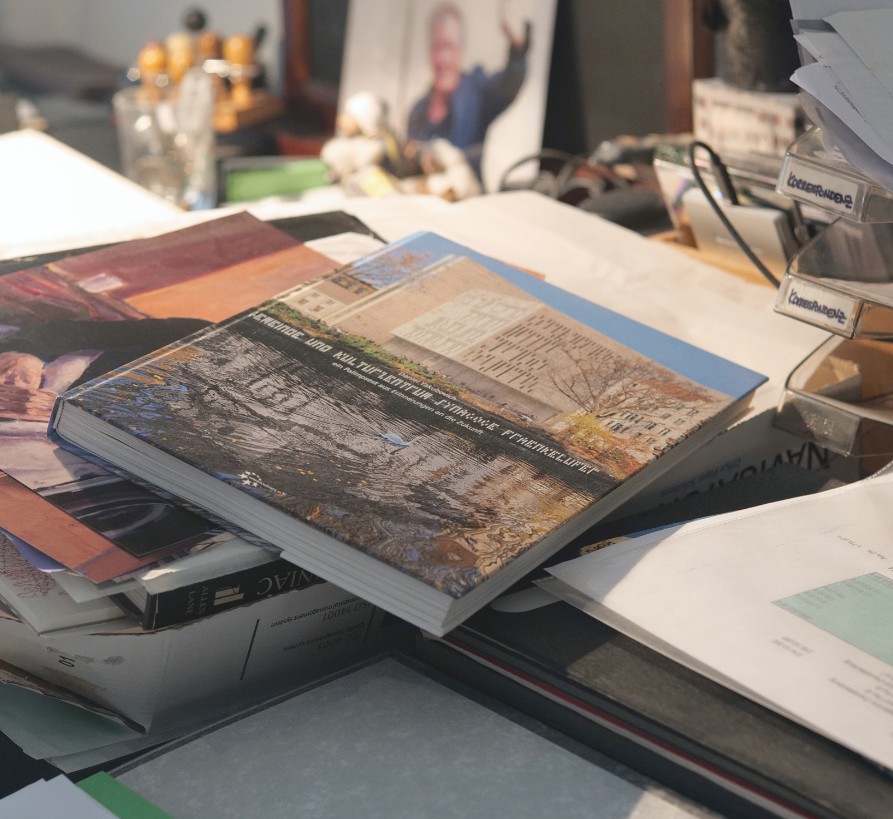
Source: Deutschlandfunk Kultur, broadcast “Kultur heute”, August 29, 2022. Moderator: Michael Köhler. Talk with Nikolaus Bernau about the final thesis by Daniel Yakubovich and the reconstruction plans of the synagogue on the banks of the Fraenkel in Berlin-Kreuzberg.
to the contribution on the website of Deutschlandfunk Kultur following link:

Note on the text shape
The following article is based on a broadcast contribution. No literal transcript The text is not a publication by the author, but an independent reproduction of the content of the programme. German radio and is the editorial responsibility of this website.
For copyright reasons, the statements of the parties are mainly paraphrased and in indirect speech sequence, selection and formulations follow the content structure of the conversation, not the technical editing of the original broadcast.
A “positive” project with blind spots
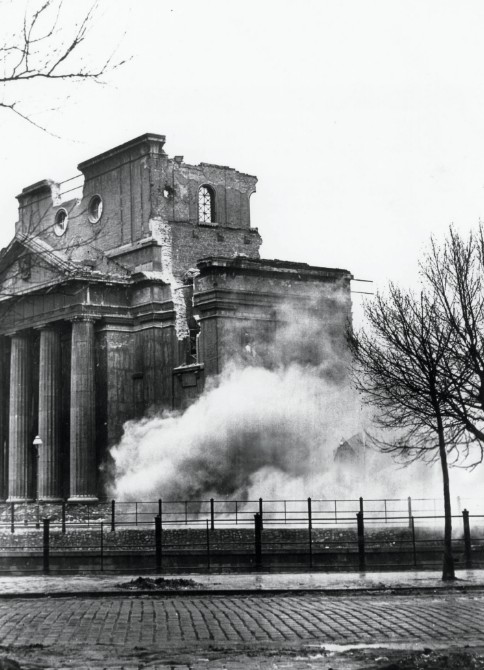
The starting point of the radio conversation is the observation that the planned reconstruction of the large synagogue on the Fraenkelufer river in Berlin appears to be a purely good news in public at first: as if a reconstruction could symbolically “revert what was destroyed during the Pogrom Night.” Michael Köhler outlines the long prehistory of the reconstruction idea and the question whether a 1:1 replica or a contemporary design would be more appropriate after arson, war destruction and demolition – and with the over-challenging expectation of healing and “restitution of a state that can never happen again. Yakubovich’s master thesis reads the planned reconstruction as a symptom of a deeper memory-cultural problem.
Politics, symbolism and a cancelled handover
Nikolaus Bernau reports on an occasion that was supposed to mark the start of a broader debate: Daniel Yakubovich wanted to officially hand over his alternative draft to the Berlin Senate. Formally burst for reasons of appointment, this rejection receives a symbolic taste against the background of Saleh’s strong commitment to a true reconstruction as true as possible. Yakubovich rejects a historic reconstruction in this form; Bernau refers to first protests against the Saleh project and draws parallels to the Bornplatz Synagogue project in Hamburg.
Why reconstructions are so popular – and what speaks against
On the obvious question of what one could have against the reconstruction of a destroyed Jewish church at all, Bernau refers to the wider debate about architectural replics. Behind many projects stands the unspoken hope, Sealing wounds or Making caesuras invisible – an idea that is emotionally understandable but problematic: Architecture can’t cure traumaAt the same time, reconstructions in public would usually be Purely aesthetic In the case of the Fraenkelufer Synagogue in particular, this is insufficient: The temple character with four Doric columns and the reference to “Spree-Athens” had a clear national, partly nationalist content and the strong patriotic self-location of Jewish communities in the Empire Mirrored. Bernau criticizes that this national part of the German-Jewish self-image is largely ignored in today’s memory culture, so that “only” a beautiful form is spoken and the partly contentious meanings are displaced – similar to in the case of the dome of the reconstructed Berlin castle.
Fraenkelufer as a project of the majority company
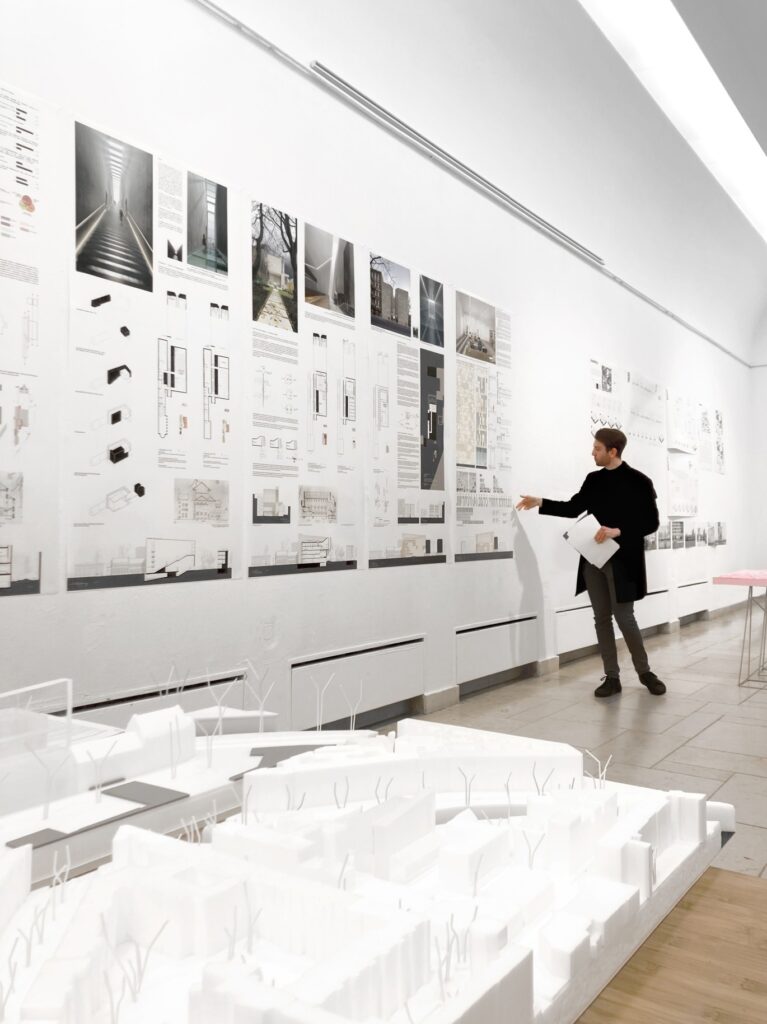
Bernau is centred on a change of perspective, which he takes over from Yakubovich’s work: the projects in Berlin and Hamburg will not only be used as a construction project for Jewish communities, but also as a Attempt of the non-Jewish majority society read to cope with the trauma of the Shoah structurally. Before this setting, he says, Yakubovich is asking for something supposedly self-evident at first: a broad, open debate that would be appropriate to the symbolic charge of the place. In fact, so far there has been “no debate”. This is the result of the demand for an architectural competition: today’s space program differs fundamentally from Beer’s planning, so that there can be no easy return to an old shell with new content.
Reconstruction or contemporary solution?
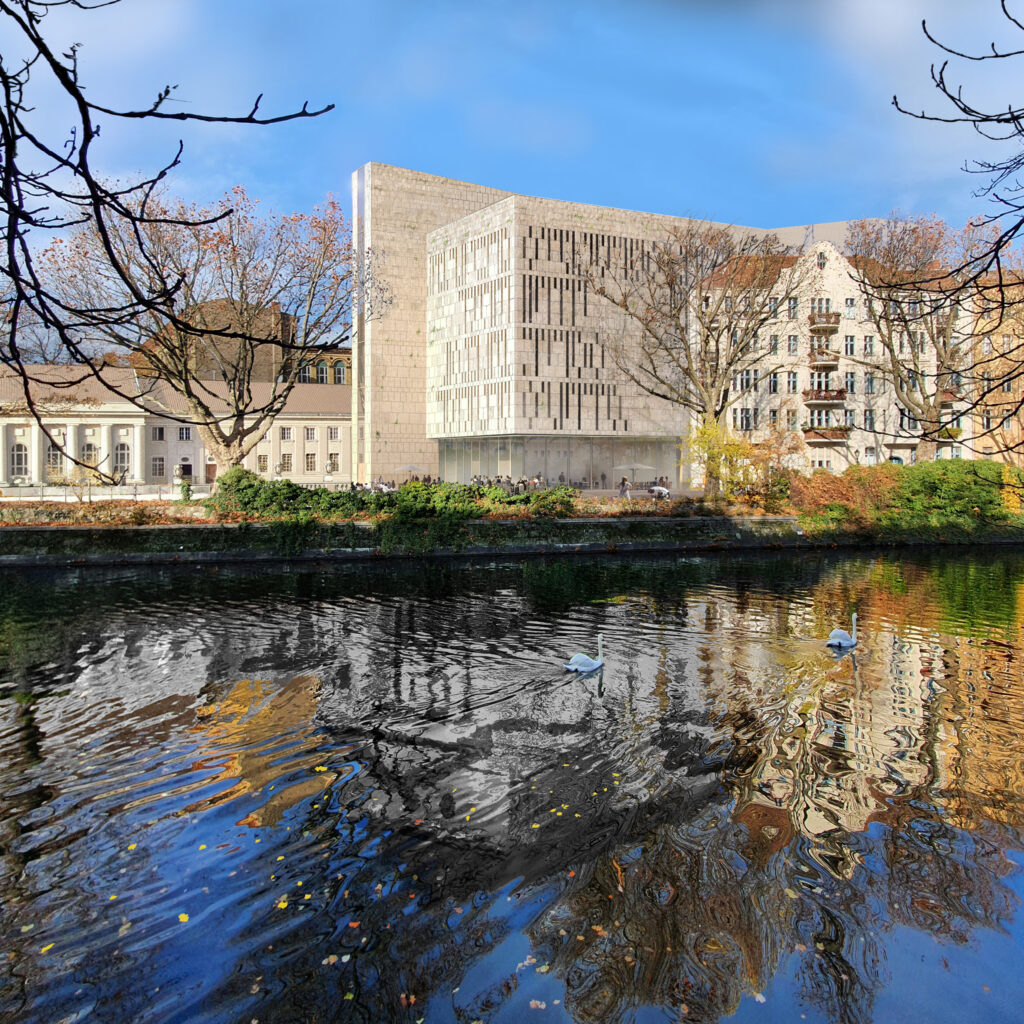
In the further course Bernau summarizes the guidelines of the alternative design. Yakubovich pleads for a contemporary architectural response that takes both the material remains of the destroyed synagogue and the current needs of the community seriously. The remaining rubble hills – alleged debris of the former main building – should not be overformed or removed, but integrated into a new ensemble; the destruction should remain legible in the building instead of disappearing behind a reconstructed Kaiserzeit facade. Bernau criticizes the practice of “reconstructing any facade” and “putting something behind it.” – for example, a community centre instead of an actual synagogue – without contemplating liturgical function, internal use and urban planning. The so-called “core requirement” is therefore less of a single measure than a bundle of conditions:
- an open, controversial debate on the meaning and form of reconstruction,
- an architectural competition that actually allows contemporary solutions,
- and dealing with the material remains of the destroyed synagogue, which keeps the breaks in history visible instead of making them disappear behind a historising backdrop.
Subsequent remark
In an interview by Michael Köhler with Nikolaus Bernau, the Deutschlandfunk broadcast “Kultur heute” (culture today) on 29 August 2022 publicly raised for the first time the criticism of the planned reconstruction of the synagogue on the banks of Berlin’s Fraenkel – and acknowledged this work as an independent architectural and memory-political position. The fact that this topic was taken up in a supra-regional cultural radio marks an important step which gave the counter-design a first media public. In terms of content, Bernau succeeds in naming some fundamental lines of argumentation of the master thesis pointedly, such as the break with the national patriotic pictorial language of imperial synagogues, the shortened, purely aesthetic confrontation with replicas and the instrumental use of architecture to overcome the dream of the German non-Jewish majority society.
Yet the contribution remains limited in its depth. The ductus of the conversation resembles an improvised feature commentary rather than a carefully researched journalistic discussion. Repetitions, fuzzy formulations and a repeatedly imprecisely reproduced project context give rise to doubts as to whether the design and its methodological arrangements were actually read. Thus Yakubovich is repeatedly reduced to his function as a “young student”, while at the same time speaking of a large “core requirement” that was not raised in this package. The demand for an architectural competition, for example, is to be understood as part of a larger systemic argument – it does not stand for itself, but rather in connection with a critique of symbolic power allocation, intransparence and a memory architecture as a political instrument.
Above all, however, the contribution lacks an in-depth examination of how such a highly symbolic decision to rebuild a destroyed synagogue without years of open and participatory debate preceding the decision Bernau mentions that “no debate has taken place so far – but an analysis of the reasons, actors or historical patterns of this void remains in the short of broadcasting time.
This creates a broadcast that makes it audible for the first time that there is contradiction – but not how this contradiction was negotiated, justified or suppressed. For a first contribution, this was more than nothing; however, the text remains among the possibilities of a public-law cultural journalism, which should have the claim to go deeper, to leave its finger in the wound longer and not only to talk about actors, but also with them.




See also: