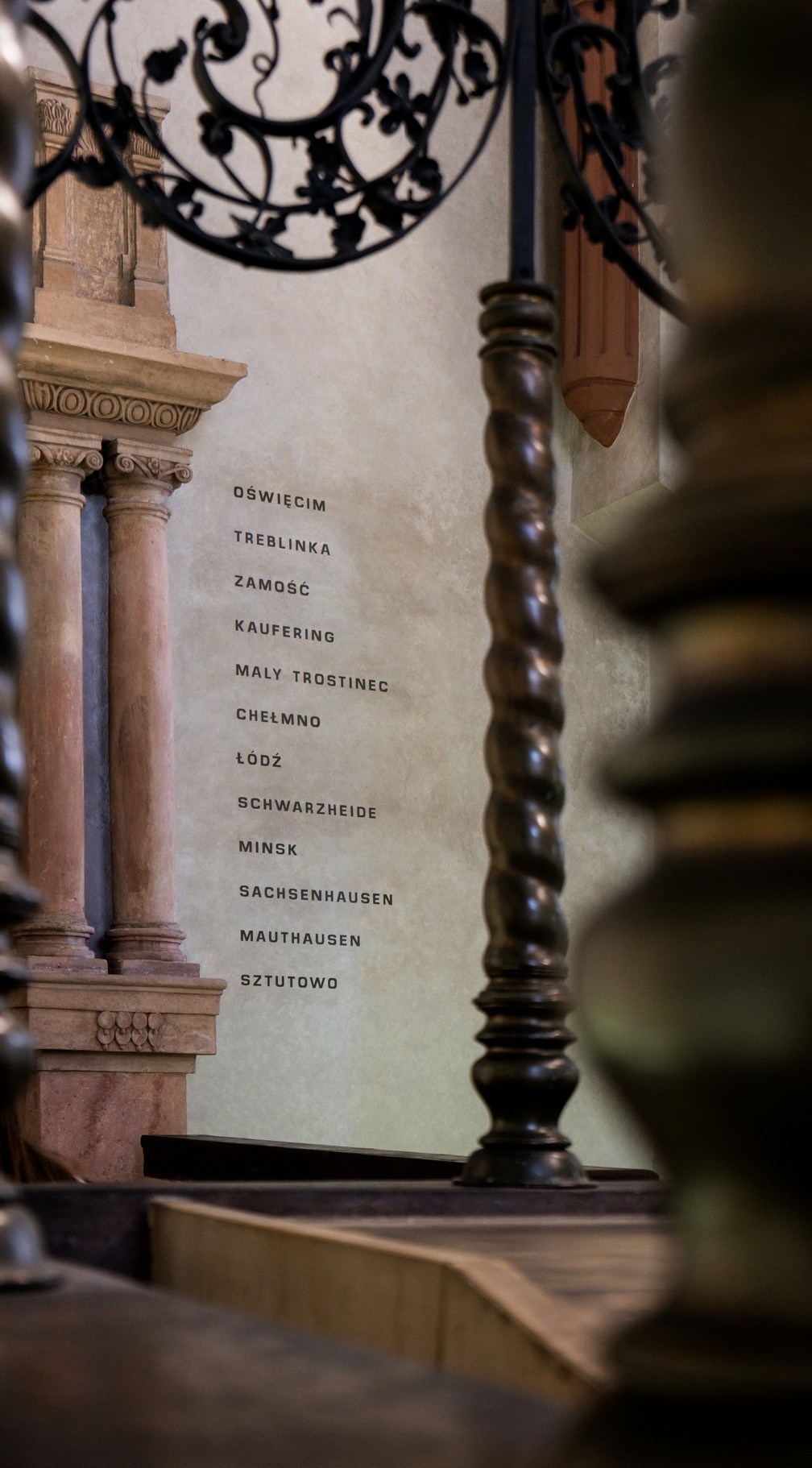
And the Spirit of God hovered over the water
Genesis 1:1–2
In addition to the weekday Synagogue in the existing building of 1916 and the Festival Synagogue on the alleged ruins of the former Almemors is the Mikveh a central part of the religious use units. Mikveh comes from the Hebrew and means “water collection” because in Judaism the concept of purity and uncleanness is important, as a Bible quotation makes clear: “And I will sprinkle clean water upon you, that you may become clean.
Cleaning in the seven-stage ritual cleaning bath (טְבִילָה”Tevilah” is compulsory for married women in Orthodox Judaism after menstruation (niddah) and after the birth of a child. Also the use on the eve of the wedding is common. Mikveh in some currents – for example in Hasidic, Sephardic and sometimes also modern Orthodox circles – mostly after a cemetery visit, before Shabbat or high holidays, in the morning of the wedding or after ritual contamination, for example after contact with the dead or after ejaculation, whether for reasons of ritual purity or for spiritual approach to a higher degree of proximity to God. Independent of gender and flow, the Ritual Bath for transfers of faith, the so-called “Giur”, finds a special use.

Space axes, gender segregation and symbolic depth guidance
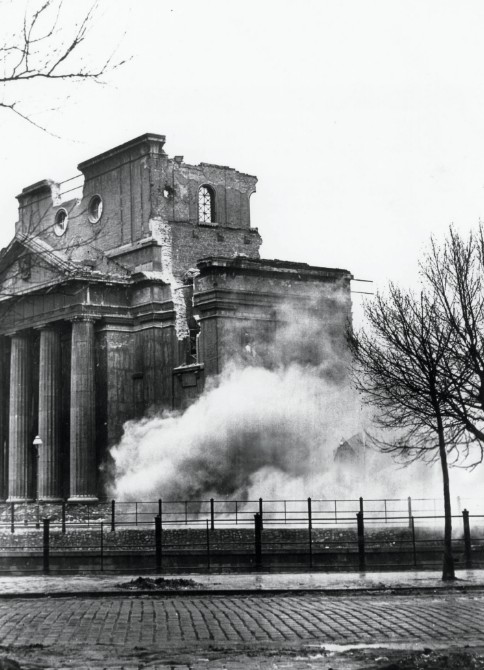
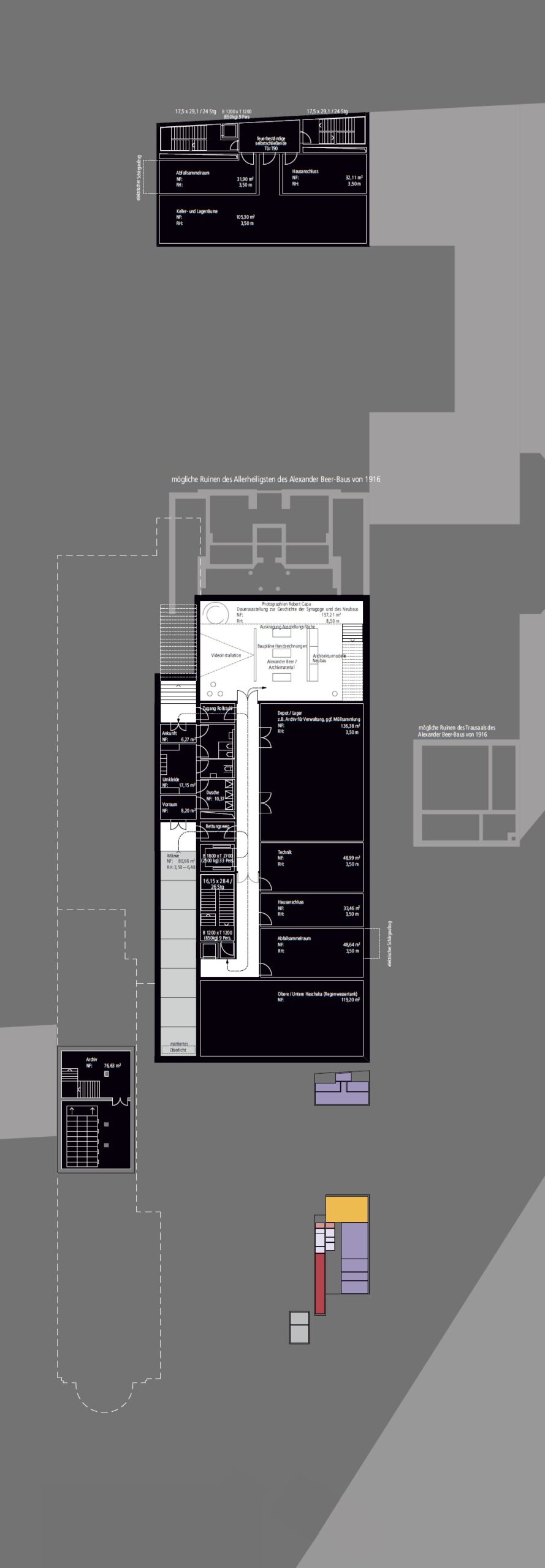
During the Festival Synagogue On the bank of the forecourt, a monumental stairway is opened up, which extends through a ravine of reinforced concrete to the light and the sky in a processional way. The cleaning bath is located discreetly on the back of the courtyard. This arrangement follows the historical model of the destroyed synagogue, in which women entered the church according to Orthodox rite via a separate entrance to the towers – partly from behind – while men were reserved for the magnificent south entrance. Beer-Synagoge also existed on the banks of the entrances to the entrances as well as a level access to the main prayer room via the back entrance, but those staircases which led exclusively to the entrances and did not open up any other rooms – such as the service apartments of the doorman or castellan, sanitary facilities, intermediate levels or the attic – were exclusively on the courtyard side.
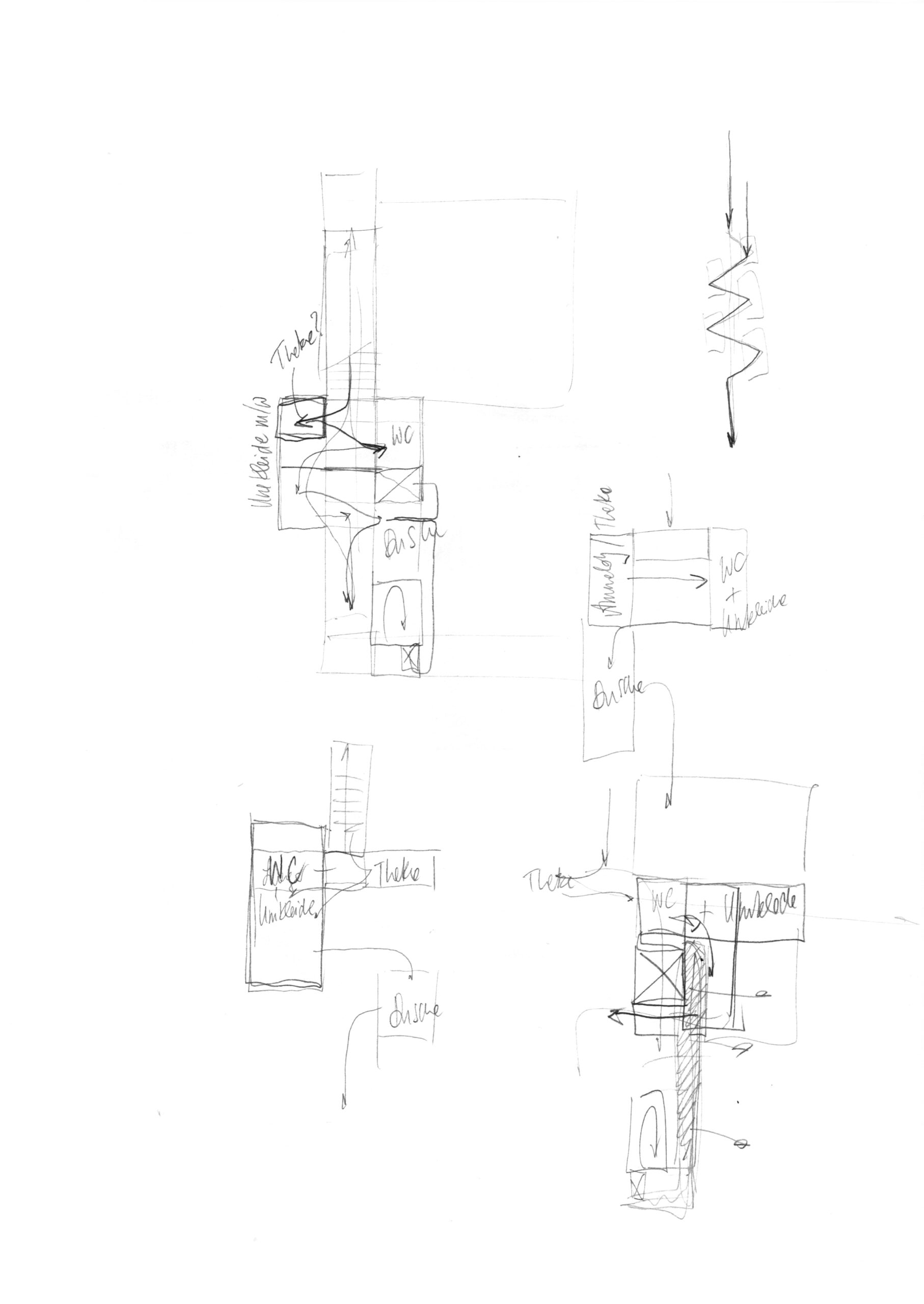
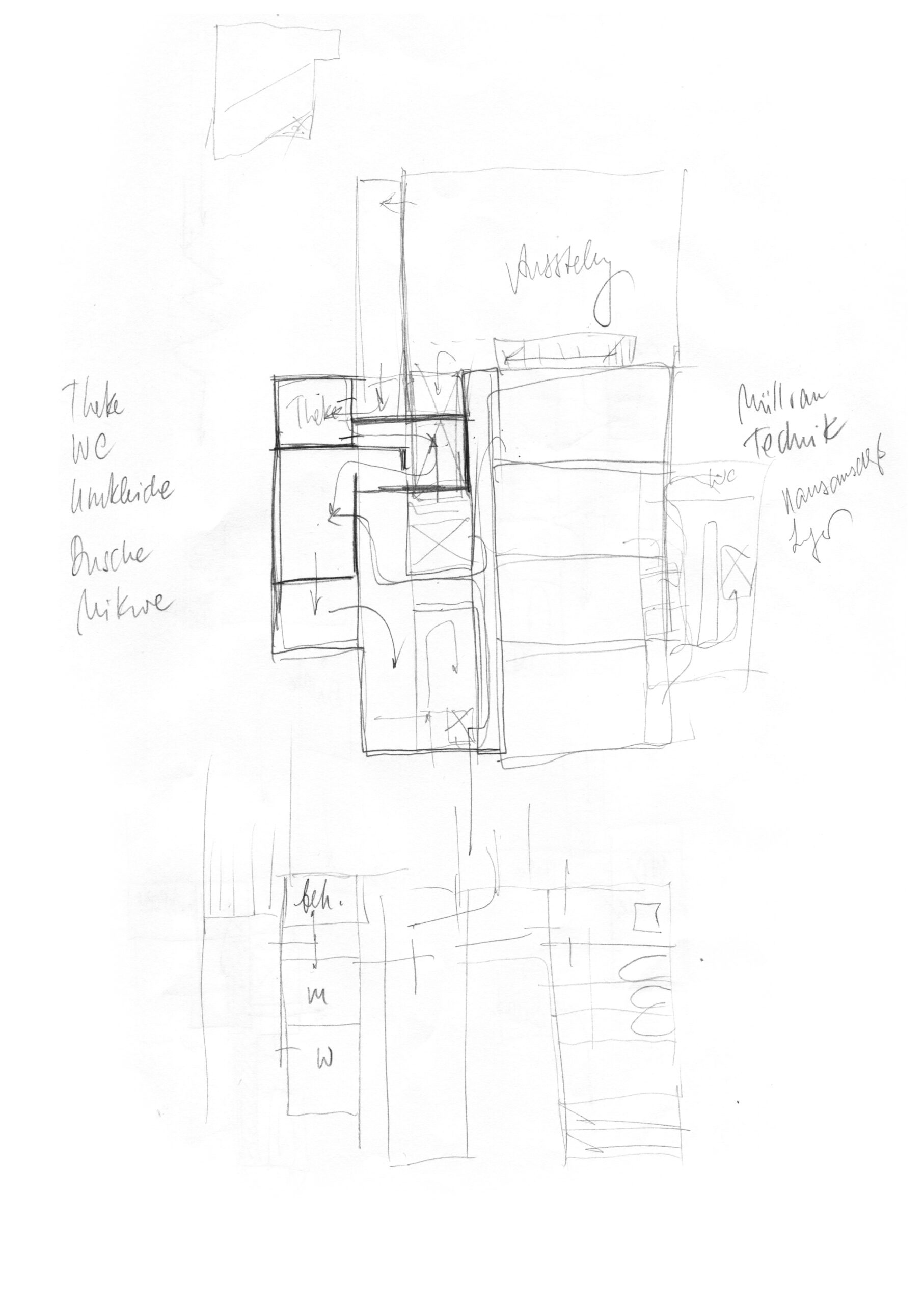
Taking up this historical element, a counter-movement arises, a counter-pole that does not ascend to God but leads to the depths, not to light, but to darkness, which does not lead to the end of a long path that ends with God, but straight to the beginning, into the amniotic fluid, into the womb, in which nothing is allowed to disturb the contact between the naked skin and the water. In preparation for this ritual descent, upstream spaces are provided, which serve the bodily manifestation and purification in which the shell of everyday life can be stripped off before the naked body descends seven steps into the silent, waiting water. This act resembles a stripping off of the everyday and profane, a symbolic “disposal of the self”, i.e. on a self-covering-making in physical and spiritual terms, – from clothing, smells, cosmetic remains, and perhaps even from those attributions which I define in social space. Only then, naked and dissolved, does it confront water.
The descent into the Mikveh Thus, above all, physical purification serves – as it were, a descent into a grave in order to rise again and to be reborn from the amniotic water. On the other hand, the ascent into the synagogue also serves the spiritual ascent and psychic purification. The staircase, which is driven in like a wedge between existing and new buildings, separates body and spirit and brings them together via the merging of both ways to external and inner ritual purity.
Light guide and threshold room
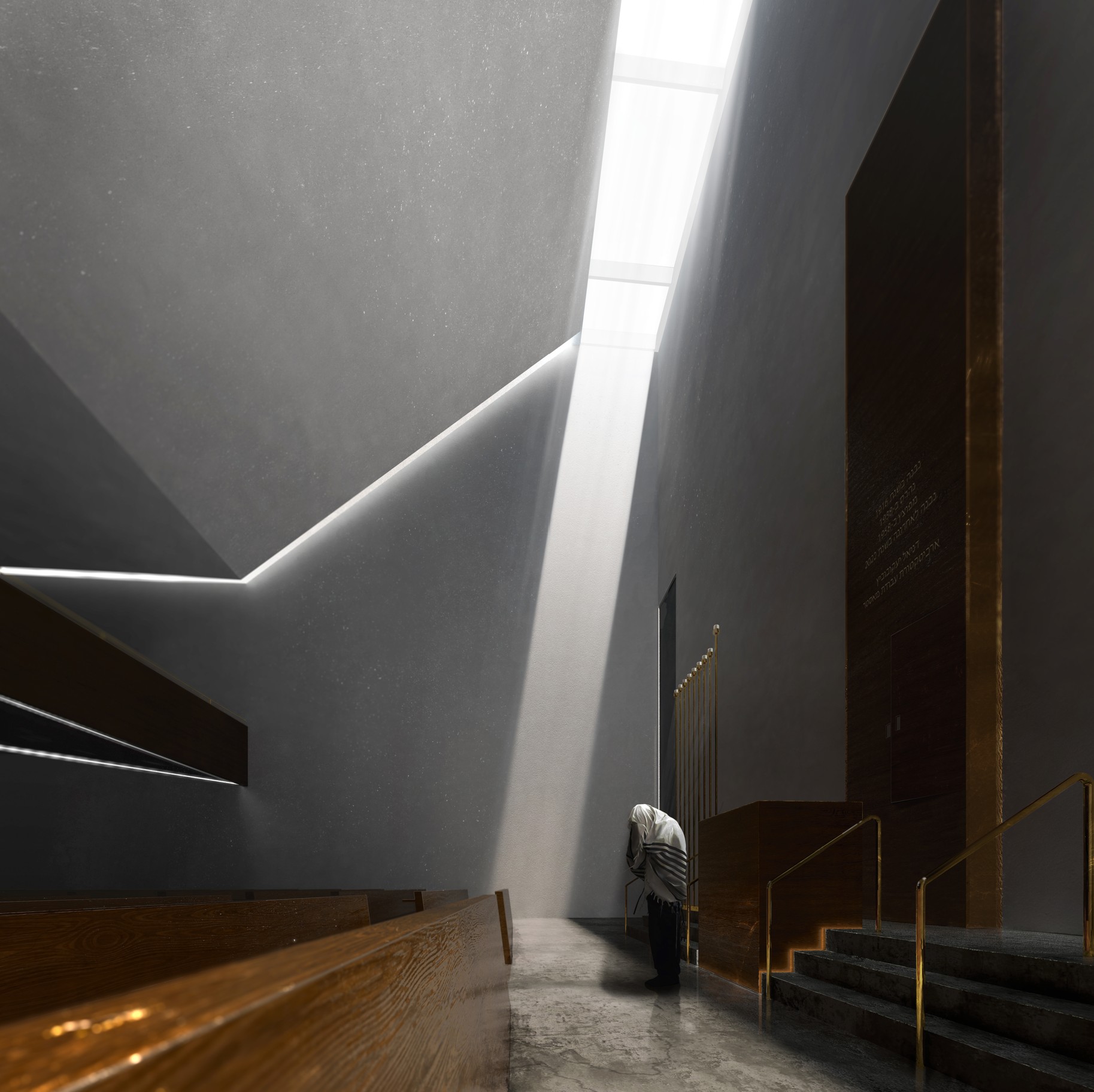
As in the synagogue, a gap of light is the only natural source of light. It is located above the entrance to that stairway leading up to God. This symbolically closes the cycle, and the top and bottom, the beginning and the end are joined together. The pavement slabs, which lead from the bank over the forecourt to the main entrance, condense themselves and become increasingly narrow until the last plate before entering the stairway is replaced by matt glass, the natural light entering the main entrance. Mikveh As in the interspace that forms the entrée to the Day Synagogue, the visitor stands before entering the building on a glass gap as well as at the threshold between two worlds. This moment of transition – from the profane to the sacred, from the outside to the inside, from the visible to the hidden – marks not only a physical one. Change of directionIt is also a metaphysical threshold at which perception and meaning overlap.
Water architecture between Halachian requirement and building technical implementation
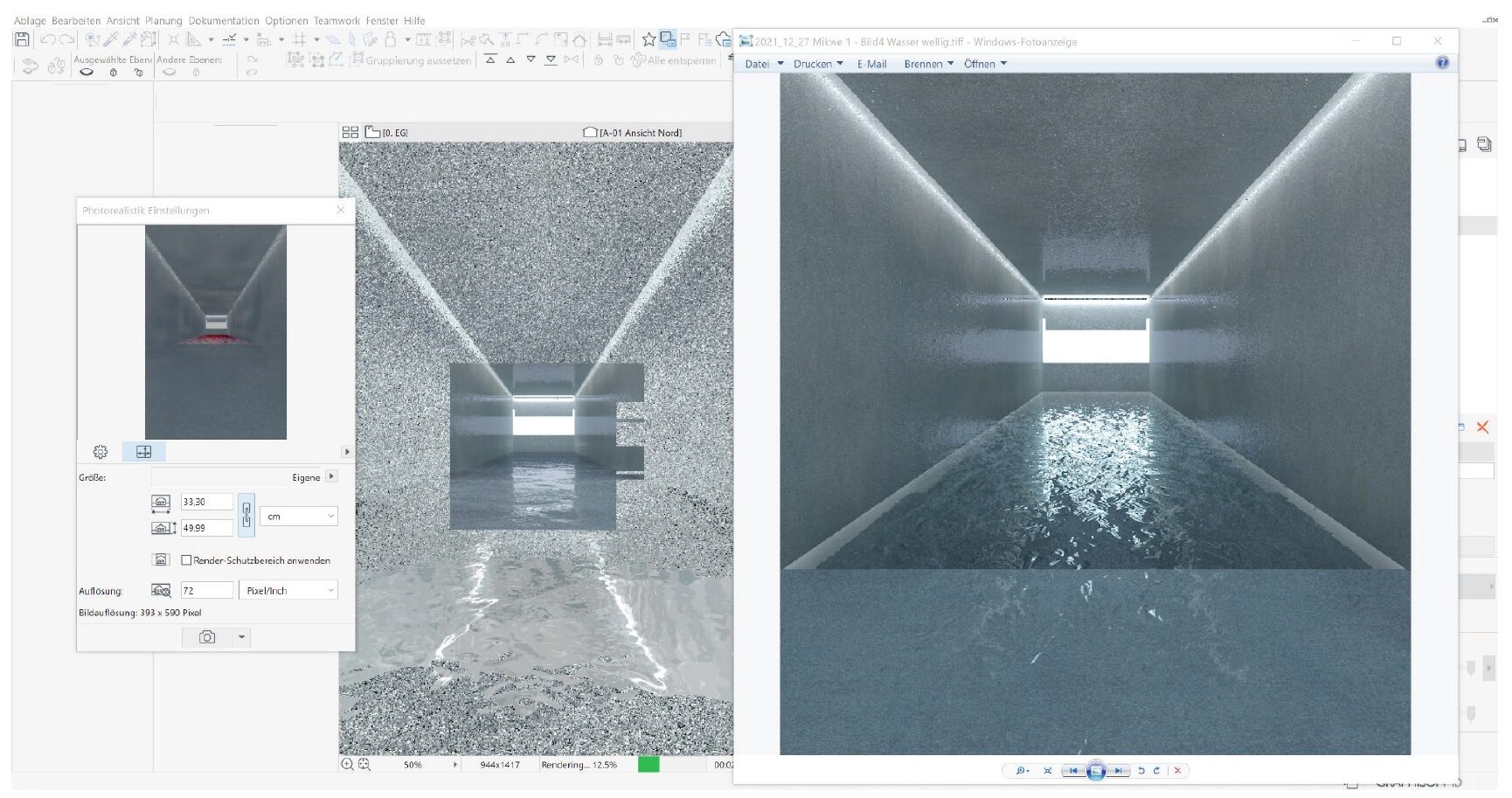
On the roof, where a hidden garden is laid out, rainwater is to be collected and passed through massive shafts into the basement. This happens in accordance with the Halachian requirementswhich require that, for the purpose of filling a Mikveh Only so-called “living water” (Hebrew: mayim chajim) can be used – i.e. natural, non-standing water that was not guided by technical pipeline systems. These include especially rainwater, groundwater or naturally flowing surface water. As alternative sources, the rainwater leaking in the area, which is pre-filtered over an upstream meadow area, the ground water of the building ground, the water of the nearby Landwehr canal or – during the winter months – melted ice blocks from Berlin’s surrounding area are considered.
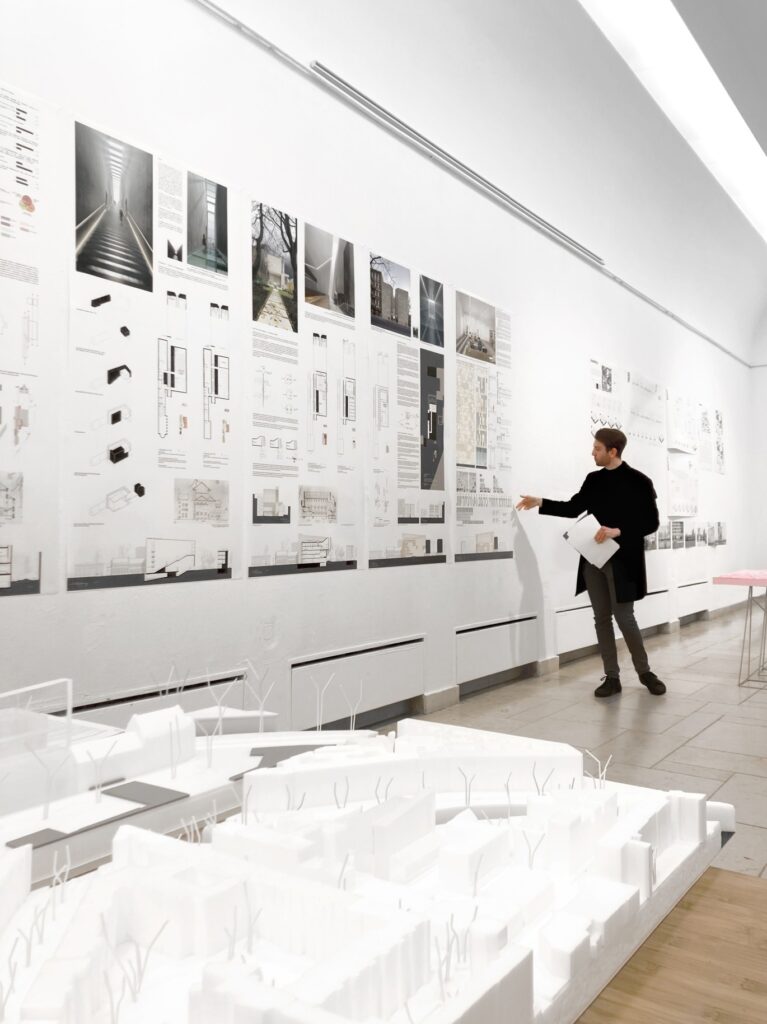
© Daniel Yakubovich.
There is also a meadow area in front of the building, which acts as a technical retention and leaching zone. The precipitation water filtered there can be fed into an underground storage system in the basement via a pipeline system of technical building equipment. Halachian requirements In this way, a continuous contact could be established between the living water that was originally introduced and the water that might be added to it from urban supply. Maintenance and control of the plant could be carried out via domes with integrated access points in order to ensure regular technical inspection by the competent personnel of the building equipment.
Published with permission of Photo Marburg Image Archive.
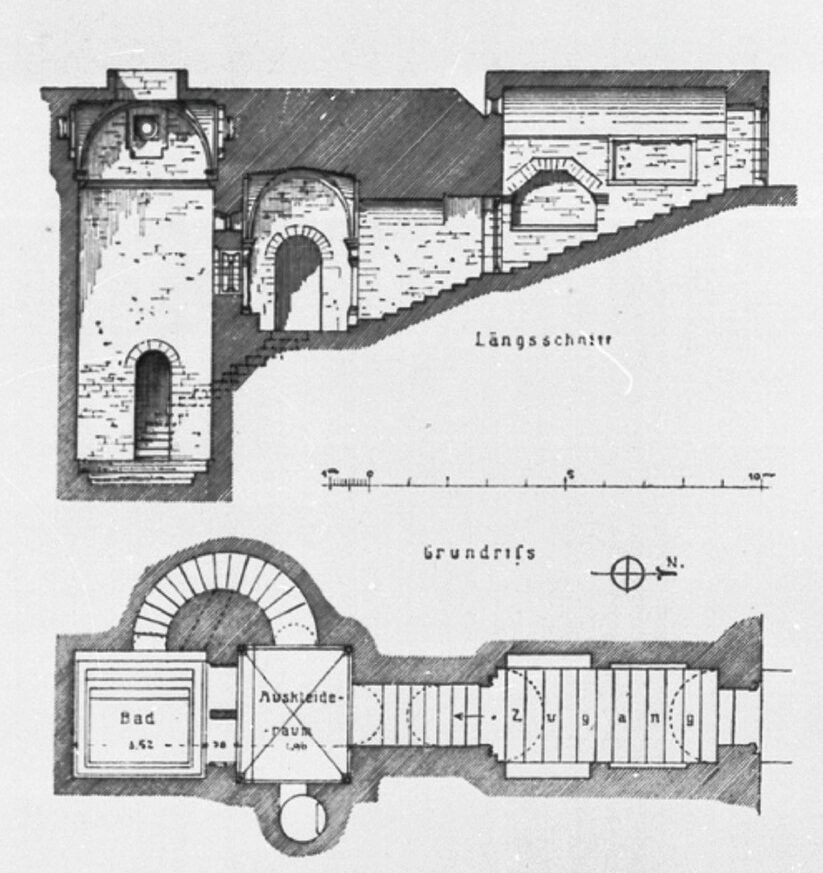
The possible use of groundwater has historically often been the decisive reason why: Mikwen In the medieval synagogues in Tiefkellern, for example, Mikwe in Erfurt, Cologne or Speyer were built. This tradition of Jewish life in Germany is also taken up here. However, so that the water for ritual purification is always renewed, Mikwen could also be installed near the river. The processional staging of the movement sequence in the ground plans of this project also plays a crucial role: the visitor descends the stairs from the courtyard entrance into the Mikwe and meanders through an organically folded enfilade from space to space – a movement sequence reminiscent of the winding structure of internal body landscapes and traces the way of water through natural systems before descending straight into the water.
The rainwater tanks can be designed in such a way that the dome shafts instead of the former four pillars of the antique Portico In a similar way, the Aschrottbrunnen in Kassel was donated by the Jewish industrialist Sigmund Aschrott in 1908 and destroyed in 1939 by the artist Horst Hoheisel at documenta 8 in 1987 when it sank into the earth. Negative form “The real monument is the passer-by who stands on it and thinks about why something was lost here.” — Horst Hoheisel, 1987, on documenta 8, as sunk into the earth. Negative form and restored as a memorial.
“The real monument is the passer-by who stands on it and thinks about why something was lost here.” — Horst Hoheisel



See also: