


Thanks to the Jewish General for publishing my obituaries!
The following text is essentially based on an entry for Kay Zareh, which I wrote for Wikipedia; the content overlaps with the text there are therefore expressly intended and inevitable. For this website, the text is carefully editorially revised and placed in a more free, essayistic framework.
Childhood
There are biographies that do not want to fit into the smooth forms of a curriculum vitae. Kay’s story was one of those – characterized by the casual depth with which he told about things that would have been unbearable for others. His life did not begin with the gentle narrative of an arrival, but with the racial anthropological investigations and cranial cranial surveys. His father belonged to that generation of young Persians who sent the Shah to Europe as a messenger of an industrial modernist. An architectural study in Liverpool was supposed to lay the foundation, but the spectacle surrounding the 1936 Olympics brought him to Berlin. There he had probably been taken over by the staged openness and the polished hospitality of the Third Reich – and then, as it is often said in such anecdotes: He remained, got to know a German, fell in love.
Even when the unleashed war came back to Berlin and rained down in bombs on the Spreemetropole, the father remained. Kay added that his father had been one of only a few Persians in the imperial capital of those days, and that as a prospective architect and with a sober view of existence and loss – mapped the destructions: which houses were bombed? Which houses were still habitable? Which facade only?
In the midst of this rubble landscape, Kay Shah Zareh Born on 18 January 1943 in the Berlin district of Spandau – a child who bore the absurdity of the epoch in his flesh and blood. In a semantic paradox, the Persian self-title “Arya” and the German racist ideologization of the term “Arier” met. But instead of recognition, the Nuremberg laws gave him the classification as “mixing” and several measurements of his oversized infant head.
The post-war years that followed were a constant pendulum strike between Berlin, Tehran and southern Germany – a biography that confronted him early on with very different cultural and urban contexts, and which certainly understated his later work as an architect and city planner.1,2 After the transfer to Persia in 1948, at the age of thirteen, the decisive turning point followed: the return to Germany and admission to the family of Massow in Gauting.
In spite of all the early shocks – or perhaps precisely because of the experience of how quickly security becomes a ruin – Kay developed a remarkable nature. He met the world with an unbiased kindness that was less naive than a conscious attitude to life. As an architect and urban planner, he looked at urban spaces with the same empathic acumen with which he also met people.
Studies
From 1964 to 1969, Zareh studied architecture at the Technical University of Berlin and graduated with a diploma. From 1971 to 1973, he studied urban planning at the University of Liverpool, which he completed with the Master of Civic Design – a degree that, to a certain extent, was programmatic for his claim to think architecture always in the larger fabric of urban development, historical context and social responsibility.
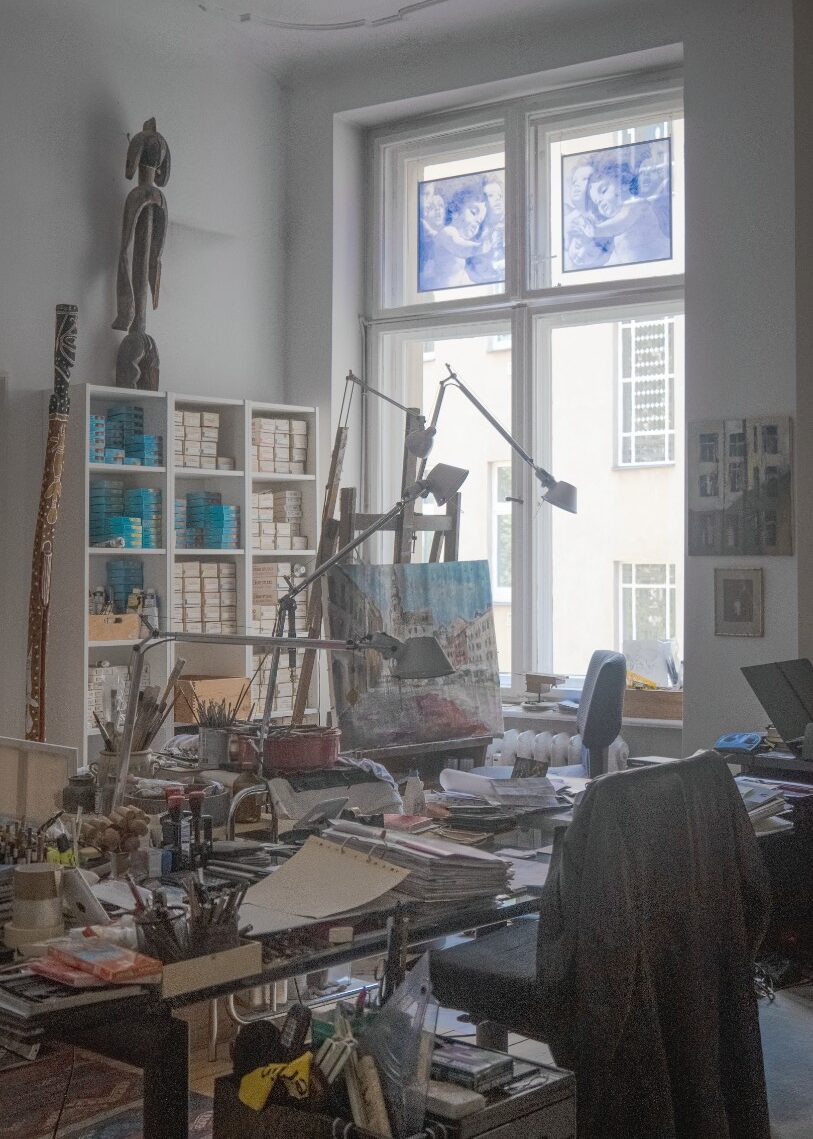
Parallel to his freelance work, he worked at the TU Berlin between 1973 and 1982 — initially as an assistant at the Chair of Urban and Regional Planning (1973-1978), then as a lecturer for Performing Geometry (1980-1982). His ability to sketch and draw quickly and precisely had certainly driven Zareh to perfection here.
During his studies he met the Jerusalem-born student Ruth Golan, with whom he competed in numerous competitions and whom he later married. In 1971 both founded the office Golan-Zareh Architekten in Berlin.3 Initially, the young architectural office distinguished itself by numerous school and university buildings as well as urban planning. Among other things, Zareh was involved in the planning of middle-level centers in Berlin (in collaboration with other offices) and realized a vocational school centre in Wilhelmshaven as well as university buildings in Vechta in Lower Saxony (division of Catholic Theology). In addition, there was an institute building of TU Berlin on Franklinstraße / corner Salzufer.
These early projects mark him as an architect who, on the one hand, was at home in serial education, but on the other hand always developed a sense of urban spatial situations and the social implications of architecture.
Architect of the reawakening Jewish life in Berlin
Construction of the memorial on the banks of the Linden
From the 1980s onward, Kay Zareh’s focus shifted increasingly to projects for the Jewish community in Berlin. Together with Ruth Golan, he won the 1988 Holocaust Memorial Competition in Berlin-Spandau. Built on the banks of the Linden River, the memorial commemorates the destroyed Spandauer Synagogue and the deported and murdered Spandau Jews.
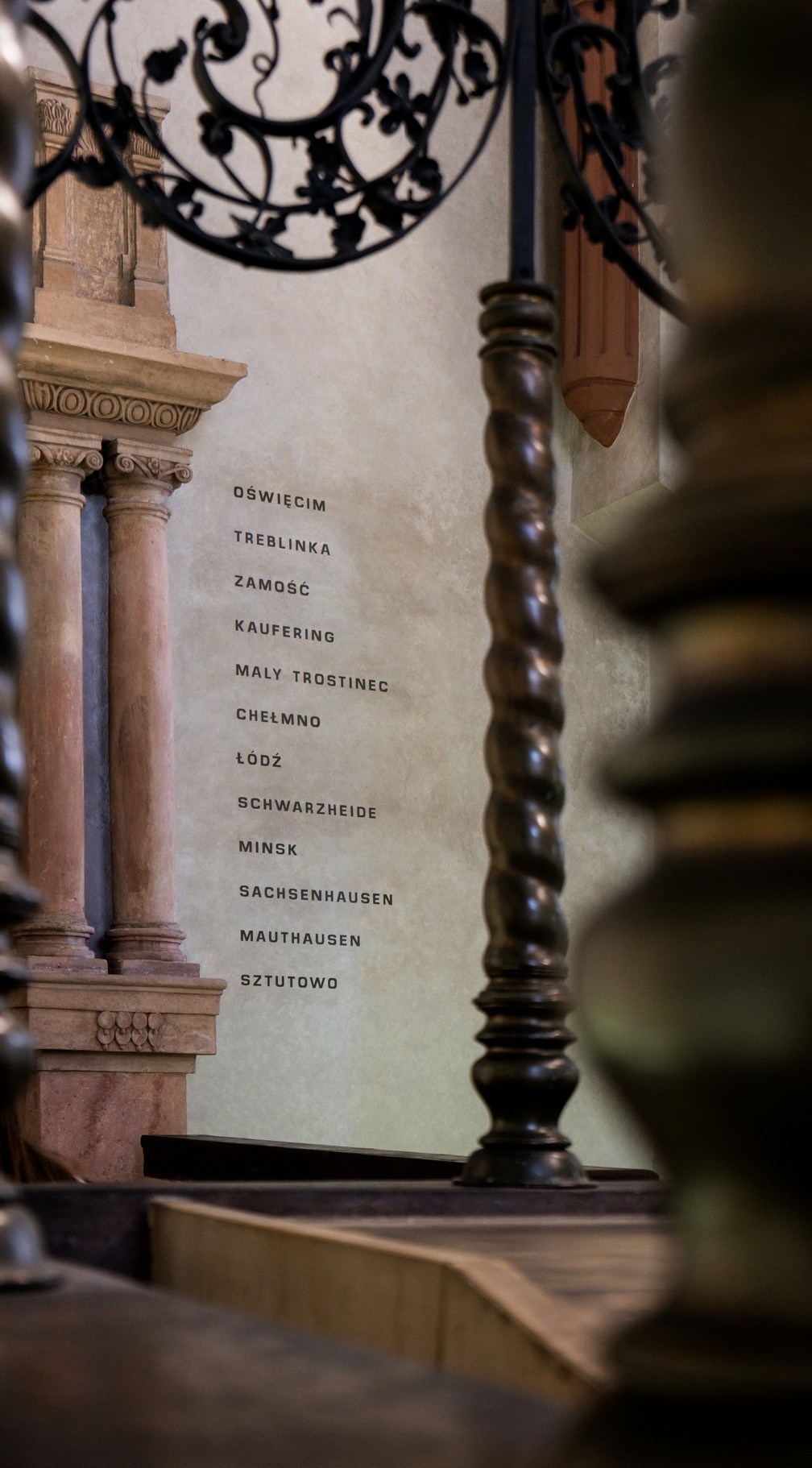
The complex represents two archaic stone cubes, which seem to be out of shape and symbolize the violent destruction of the church. About twenty years later, the office was commissioned to add a name wall to the memorial. This extension was solemnly inaugurated on November 9, 2012, a few months after Ruth Golan’s death, and condensed the memorial site with a concrete name for the victims.
Restoration and renovation of the Jewish Gymnasium Moses Mendelssohn
Another important project was the restoration and reconstruction of the Jewish Gymnasium Moses Mendelssohn in Große Hamburger Straße. The school, which was reopened in 1993, is considered the first Jewish grammar school in Germany after the Shoa and builds on a tradition that had been abruptly interrupted by the National Socialist closure in 1942. During the Nazi rule, the school served as a hub for deportations, among other things. Zareh and Golan were responsible for the careful modernization of the historic school rooms under the model of an inclusive learning environment; the attic floor was expanded with a glass connecting tunnel in a contemporary manner without dominating the historical substance.4
New construction of the Lapidarium in the Jewish cemetery Schönhauser Allee
Of particular importance is the Lapidarium The exhibition hall, inaugurated in 2005, serves as a museum presentation of historical tombstones that had been destroyed, removed or scattered during the Nazi era. The one-storey, reservedly proportioned building with its open, light structure deliberately resembles the Barcelona pavilion of Ludwig Mies van der Rohe. The reduced form language, the strong emphasis on the horizontal and the carefully choreographed path aim to give the stones literally space – in both the physical and the memory cultural sense. In this architectural restraint, Zareh’s personal ideal of generosity was reflected: it was an attempt to confront the gravity of history through clarity and silence. Therefore, the Lapidarium is not only a functional building, but a contemplative place: a quiet house of stones that enables an almost meditative examination of Jewish history.5,6
Rehabilitation and restoration of the Rykestraße Synagogue
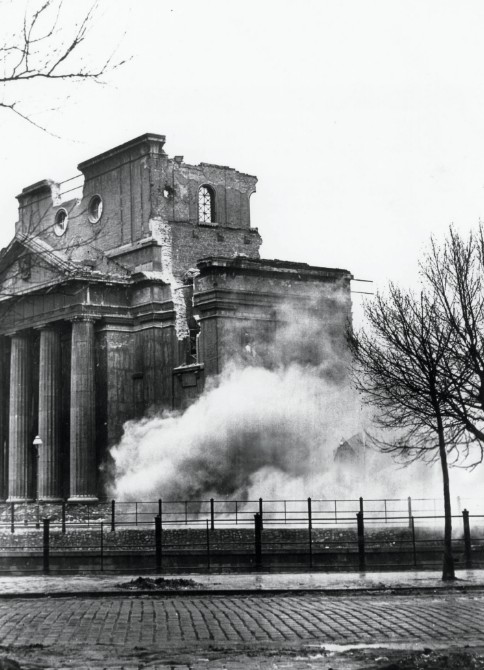
A central project in Zareh’s work is the restoration of the Rykestraße Synagogue in Prenzlauer Berg, Berlin. Built in 1906, the church – Germany’s largest synagogue – was carefully restored between 1995 and 2007 by Zareh and Golan in their original neo-Roman character.
The work took place in several phases: First, the roof was renovated (1997–1999) to produce a dense structural shell and the necessary weather protection. From 1999 to 2004, the restoration of the historic lead glass windows and doors, which had been partially walled or alienated after the war, followed. Finally, the interior was restored, with an unexpected sponge infestation delaying the construction process.
Because original plans were missing, Zareh and Golan worked as architectural detectives: they studied historical photographs, released paint layers in the inventory and reconstructed on this basis the original painting.7 The measures of the architect couple included the dismantling to the original spatial disposition, a new, at the same time restrained and solemn lighting as well as comprehensive restoration interventions in the context of a general renovation.
With the festive re-initiation in 2007, the project gained international attention and has since been regarded as a reference for a cautious, at the same time self-confident re-appropriation of Jewish sacred architecture in Germany.8


“House and Court Architect” of the Jewish Community
Due to the variety and importance of their projects, Kay Zareh and Ruth Golan were often referred to in the press and within the community as “house and courtyard architects” of the Jewish Community of Berlin.9 In this decades-long working group, Kay formed the moderating, artisanal counterpoint to Ruth Golan, who is often an impulsive and organizational leader. While she took over strategic leadership, his concentration on the substance guaranteed the stability that the joint work carried over the years. Zareh remained active as an architect until his old age, not least because he understood architecture less as a “professional” than a long-term responsibility for urban spaces and places of remembrance.


Work – selection of important projects
The following work overview gives a selection of the most important projects from several decades of activity and essentially follows the list I have compiled for the Wikipedia article, which in turn is based on Kay’s catalogue of works left to me. For this article a functional rather than chronological sorting was chosen:
Education and higher education
- Medium-level centres (12 comprehensive schools & sports halls), Berlin New building (cooperation with three other architectural offices) | 1971–1975
- Vocational school centre, Wilhelmshaven New construction in four phases | 1976–1978
- University of Vechta (Department of Catholic Theology) | New construction and extension | 1971–1985
- Technische Universität Berlin, Institute Building Franklinstraße, Berlin New construction | 1982
- “Bertolt Brecht” general school, Berlin-Spandau Replacement new construction | 1989–199010
- Jewish Gymnasium “Moses-Mendelssohn”, Berlin Restoration and conversion | 1994–2001
Urban development and industry
- Residence Branitzer Platz (171 residential units), Berlin Coordination and construction | 1991–199611
Memorials and Lapidarias
- Memorial to the Shoa on the banks of the Linden, Berlin-Spandau Establishment and enlargement | 1988/2012
- Lapidarium (Jewish cemetery Schönhauser Allee), Berlin New construction | 2001–2005
- Lapidarium St. Gertraud, Magdeburg Exhibition Design & Landscape | 2008–201112
- Memorial of former Jewish cemetery Spandau | Feasibility study | 2020
- Memorial on the site of a former Jewish cemetery, Berlin-Spandau
Sacred Buildings and Jewish Life
- Residence Jewish Community, Berlin New construction | 1984
- Central Orthodox Synagogue (Joachimsthaler Road), Berlin Complete renovation | 1985–199913
- Jewish Kindergarten (Delbrückstraße), Berlin New and enlargement | 1987
- Sports Hall of the Jewish Community (Oranienburger Straße), Berlin New construction | 1994–1999
- Rykestrasse Synagogue, Berlin General renovation and restoration with partial reconstruction | 1995–2007
- Fo Guan Shan Temple, Berlin Wedding Implementation planning and construction supervision | 201814
- Residence Jewish Community, Berlin New construction | 1984
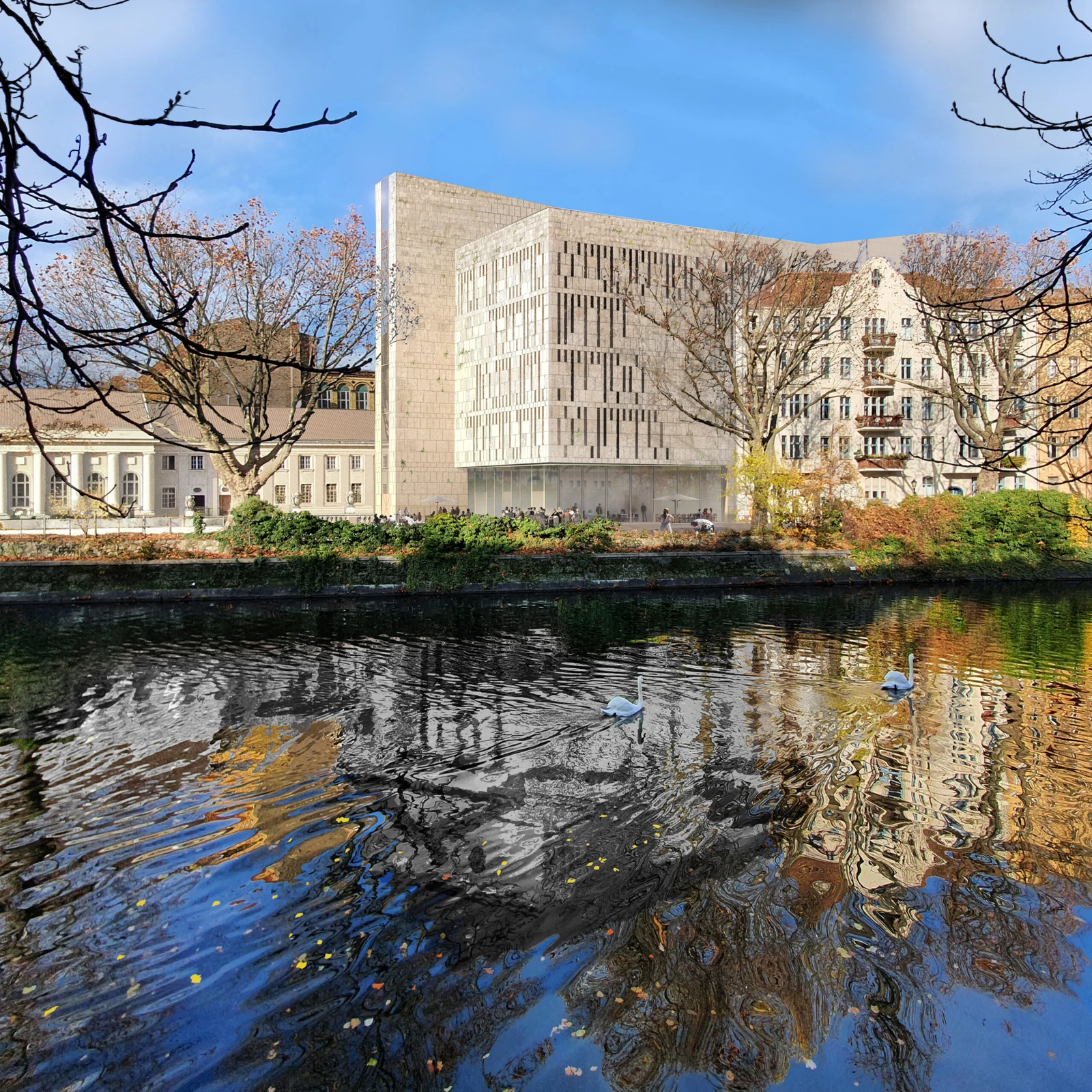
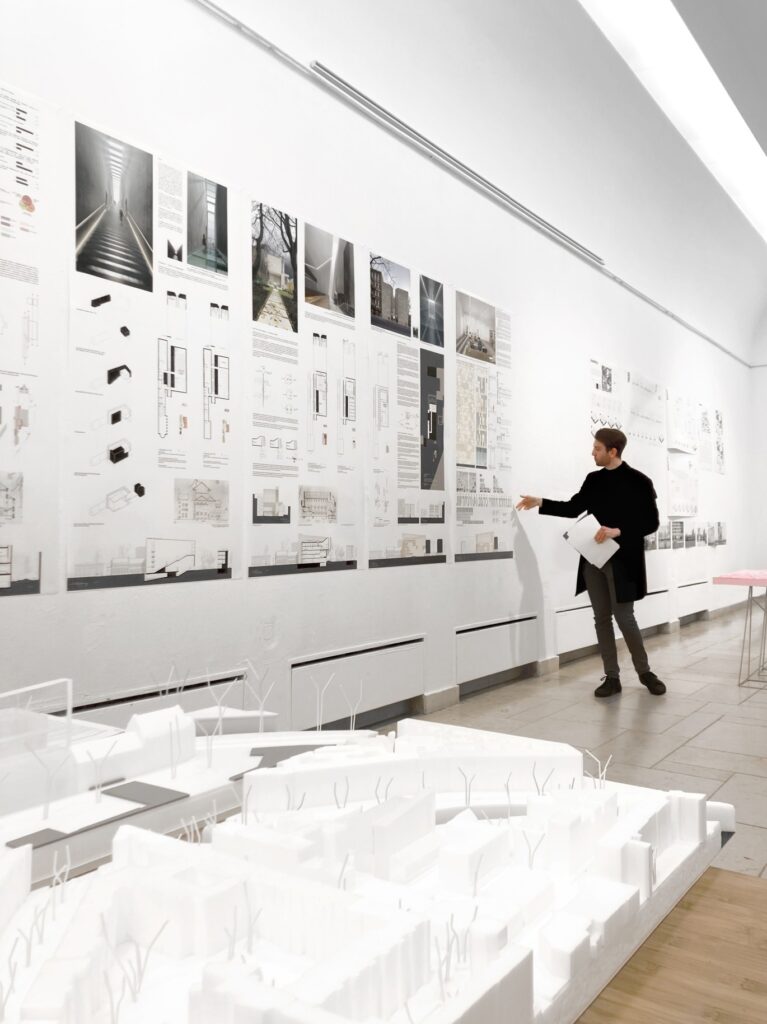
- Accompanying an academic thesis on the reconstruction of the synagogue on Fraenkelufer, Berlin Academic supervision | 2021–2022
Further information
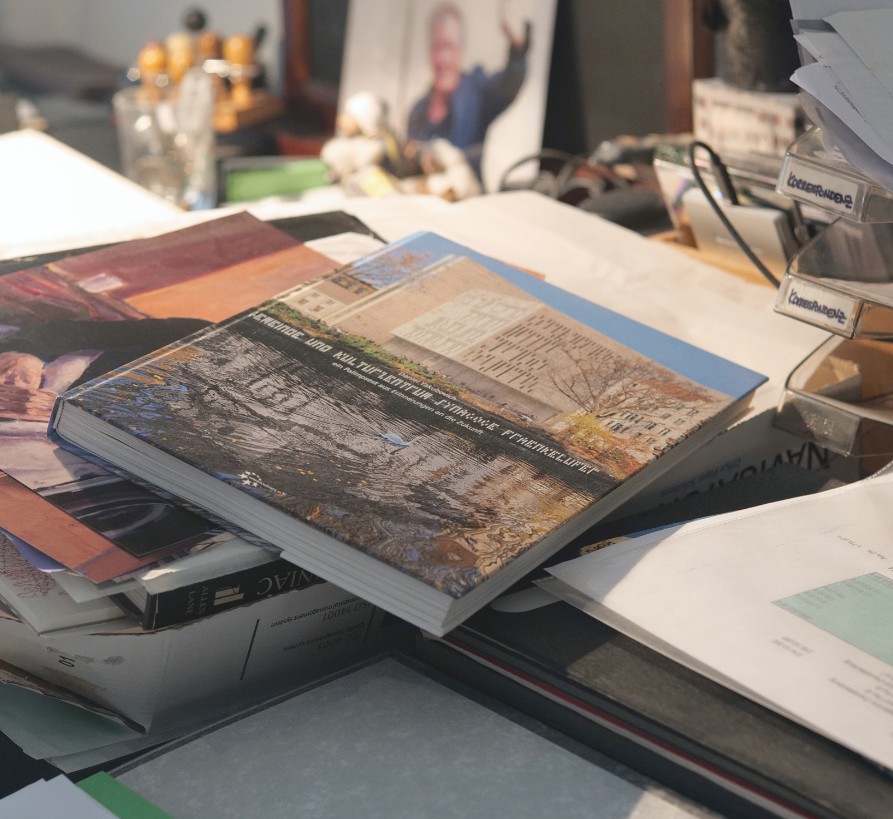
The former office of Golan-Zareh is only present in archives; an older version of the office website is accessible via web archives. In addition, publications, obituaries and memory books – including the biography “Seven Buttons – Insides” by Schirin Zareh – provide insight into the life and work of this architect who has shaped the architecture of Jewish places of remembrance in Berlin during the post-war period.
Private life, ideological background and final resting place
Kay Zareh was first married to architect Ruth Golan, born in Jerusalem; the marriage lasted until her death in 2012.
Zareh understood himself throughout his life as a Zaratustri and at the same time cultivated Jewish holidays and traditions – a constellation that reflects his biography between Iran, Germany and Israel and also reflected in his particular sensitivity to religious spaces and places of memory.His ethical compass was essentially characterized by the tsarathustic triad “Think well, speak well, act well.” This imperative translated into an almost stoic integrity and the kindness he thought of as an active, shaping force.This inner discipline manifested itself also in his private routines: over thirteen years, he visited the lake of battle for swimming every day, regardless of weather or temperature – a persevering ritual which bore witness to a quiet resistance and perseverance.
Dipl.-Ing. Kay Shah Zareh M.C.D. died in Berlin on the evening of June 14, 2025 of his short, serious illness. He found his last resting place at the Jewish Cemetery Berlin-Weißensee next to his wife Ruth.15
At our last encounter, when the terminal phase of his illness was already final certainty and we are about the finiteness of life and the infinity of the circle number π he told me that he wanted to be just a 4, divided by 2, point. – This mathematical form of reduction was the Résumé of his life and work: a desire for that last finiteness, clarity and silence which he had sought throughout his life in his designs. No more infinite decimal places. Just: point. Rest. Essence.



- Schirin Zareh, Sieben Knöpfe – Er-Innerungen, Berlin: PalmArtPress 2024, ISBN 978-3-96258-177-0. ↩︎
- André Görke, “Mourning Kay Zareh: The man who created this important memorial site on the Havelufer River in Berlin” in: Der Tagesspiegel, June 26, 2025, online edition, URL: https://www.tagesspiegel.de/ (last accessed on 26 June 2025). ↩︎
- “Kay Zareh”, in: archINFORM, online database, URL: https://deu.archinform.net/ (last accessed on 23 June 2025). ↩︎
- Verlag für Berlin-Brandenburg (ed.), Identität und Vielfalt: 20 Jahre Jüdisches Gymnasium Moses Mendelssohn Berlin, 2013, ISBN 978-3-942476-71-3. ↩︎
- “Jewish cemetery Schönhauser Allee – Lapidarium”, in: Gedenktafeln in Berlin, 10 June 2005, URL: https://www.gedenktafeln-in-berlin.de/ (last accessed on 23 June 2025). ↩︎
- “The House of Stones”, in: Berlin.de, 1 December 2006, URL: https://www.berlin.de/ (last accessed on 23 June 2025). ↩︎
- Til Biermann, “Reopening the Rykestraße Synagogue”, in: Berliner Morgenpost, November 7, 2018, online edition, URL: https://www.morgenpost.de/ (last accessed on 23 June 2025). ↩︎
- Benjamin Weinthal, “Germany’s biggest synagogue reopens Friday”, in: The Jerusalem Post, September 3rd 2007, online edition, URL: https://www.jpost.com/ (last accessed on 23 June 2025). ↩︎
- Gregor Eisenhauer, “Ruth Golan (b. 1944)”, in: Der Tagesspiegel, October 5th 2012, online edition, URL: http://www.tagesspiegel.de/ (last accessed on 7 February 2021). ↩︎
- André Görke, „Die Schule sollte 8 Jahre stehen, es wurden über 30“: Die faszinierende Historie der Berliner BBO, Teil III, in: Der Tagesspiegel, 8 February 2022, https://www.tagesspiegel.de/berlin/die-schule-sollte-8-jahre-stehen-es-wurden-uber-30-die-faszinierende-historie-der-berliner-bbo-teil-iii-386554.html (accessed 22 November 2026). ↩︎
- “Westend – Branitzer Platz”, TDB Landschaft, project documentation, undated, https://www.tdb-berlin.de/projekte/stadt-raum/westend (accessed 22 November 2026). Documents the landscape project and credits Golan-Zareh Architekten; its completion date of 1998 refers to this project and does not establish the dates or number of units of the residential development. ↩︎
- Annette Dorgerloh / Friedhelm Ribbert (eds.), Lapidarium St. Gertraud, 2011, ISBN 978-3-00-035134-1. ↩︎
- Christine Schmitt, “Sell or Refurbish?” Jüdische Allgemeine, May 31, 2007, online edition, URL: https://www.juedische-allgemeine.de/ (last accessed on 23 June 2025). ↩︎
- “Fo Guang Shan Temple Berlin – Asian Tradition and Modernism United”, in: Bau- und Baustoff-Architektur (bba), April 30, 2020, online edition, URL: https://www.bba-online.de/ (last accessed on 23 June 2025). ↩︎
- “Death Notices for Kay Zareh”, in: trauer.tagesspiegel.de, 21 June 2025, URL: https://trauer.tagesspiegel.de/ (last accessed on 11 October 2025). ↩︎