Costs, circles and control
Inferno: Nine Hell Circles of the Bureau
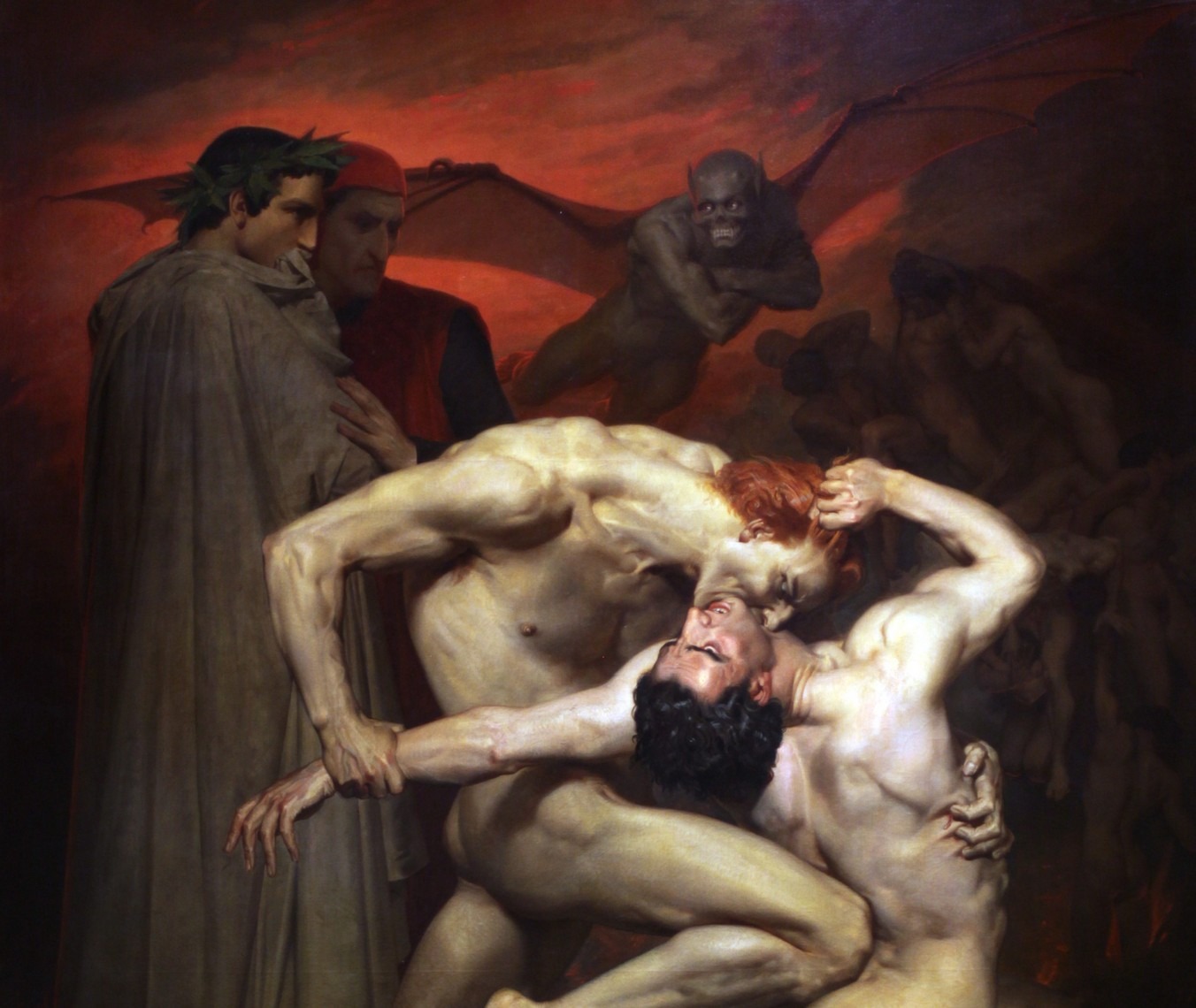
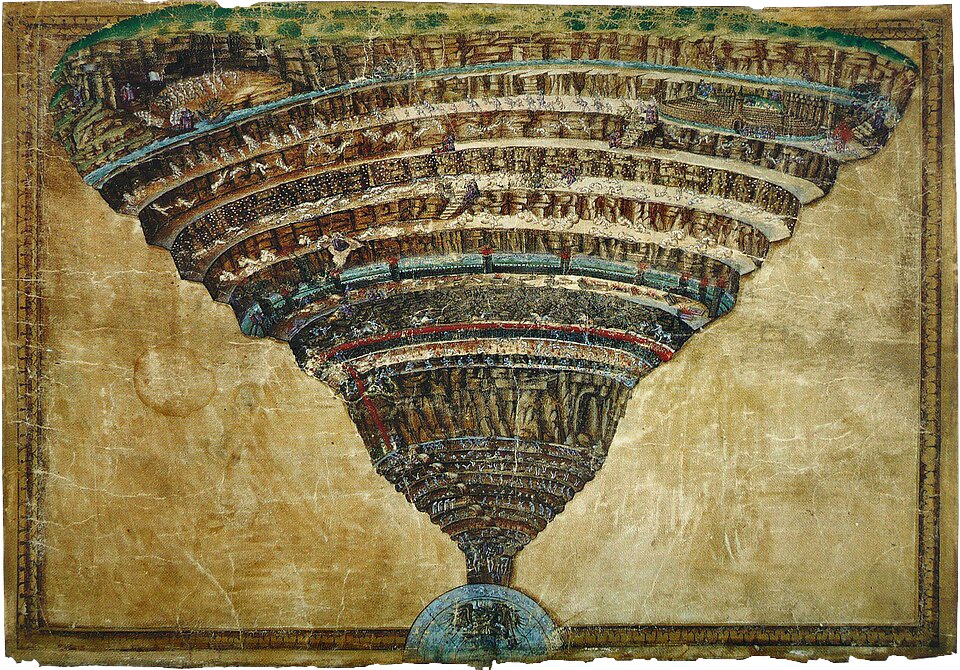
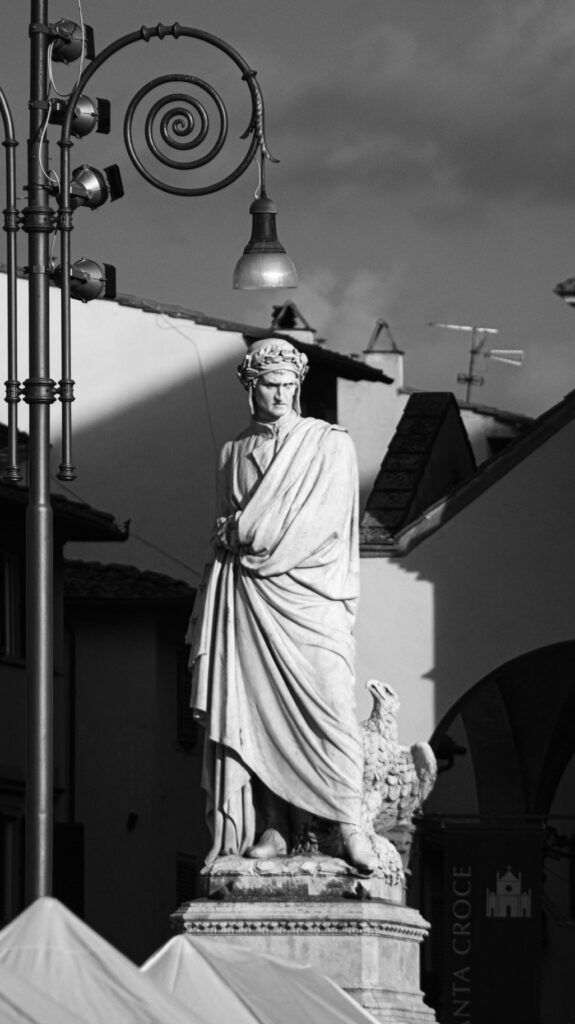
For Dante, hell is not an image of sulphur and fire, but first and foremost an order. Divine Comedy He describes a geometric figure of nine circles in a funnel-shaped shaft that pulls down to the center of the earth.1 Dante and the Roman Epiker Vergil wander through it all nine hell circles on the way to knowledge2While the souls of the damned remain permanently assigned to a certain circle, depending on the severity of their sins, and suffer torments there for all eternity. Perhaps for the first time since the great ancient underworld designs Dante Alighieri gave the concept of „Sin“ a topography and hell a spatial articulation. When the Florentine wrote his contemporaries in exile in Ravenna with the pen into eternal damnation, he could hardly imagine how familiar this mechanism would appear to us seven centuries later from nine hell circles. Inferno, the first part of Divine Comedy, designed, was not only a timeless poem about sin and consequences, but also acute time criticism and a reckoning with his presence. In the transfer to our conditions, the accent shifts from sin to guilt, more precisely – to responsibility. This is precisely why it can be transferred into our present without losing its sharpness: Dante shows greed for power and the shyness of personal responsibility as driving forces of depth. Translated into modern terms, this means that disintegration of political content through ossification of institutions and responsibility on many shoulders.3 It is precisely at this point that a system is being created that organizes itself into responsibilities and actually breaks down into administrative acts.
But these nine hell circles are no longer an allegory here, but a real process: From the nail in the wall to the hole in the account, a chain of up to nine instances in public construction – depending on procedures and contract constructs.4 Before building plans become reality, a pile of paper must be thrown into the mouth of a bureaucracy apparatus from evidence and signature runs in public construction. What the worker rarely suspects at the construction site is the chain of reaction from bureaucratic processes that ignites each of his ground-breaking holes and every blow of his hammer. In practice decides: audited invoice, stamp order, test period, payment instruction. The never-sat Moloch must eat files before he releases a payment flow as a digestive product – with which the worker can fill his own stomach at the end.
First circle – the worker on the construction site, who is working with value and hits a nail in the wall. Second circle – the construction manager, who takes this up and passes it on.5 Third circle – internal accounting, which generates an invoice from the measure – calculated by unit of measurement times unit price per order position. 4th circle – the technical building supervision6, which, as asset manager of the client, technically and technically checks whether the claimed number is constructed. Fifth circle – often the project management, which takes the „audit of the examination”, the so-called “examination” for a non-specialist or capacitively used builder. Sixth circle – then the client himself, who is responsible in the name of the institution. Seventh circle – an accounting system that instructs payment – usually with a delay; depending on the eligibility criteria and contract construct, the following is followed in public construction: Eighth Circle – the grantor may insist on an intermediate proof of the use of funding. Ninth Circle The Court of Auditors, as the last instance, awaits eschatological seriousness and asks whether the chain was really closed. If a note is missing, the circle starts from the front – and precisely this superstitious fear of queries and sanctions, Guilt and crime — to say it with Dostoyevsky — keeps the infernal game running from evidence and statements. The process resembles a sacrificial cult in which the apparatus eats energy and life before it pays. Then, less decisive was that it was built than that it was demonstrably built. Thus, the circle closes: between the “nail in a wall” and the hole on the account of the construction worker nine jobs are created from air — most without directly visible, building-related or value-creating multi-purpose.7
Purgatorio: Standard flood as a cost driver
This daily routine in public construction shows that in Germany not only material prices and inflation, but above all blind standards and bureaucratic process complexity, which increase construction costs.8,9 How the test and proof density paralyzes the public hand as builders, not only show media-present capital airports and Swabian railway stations, but also my own professional practice from cultural buildings and schools: To every brick and floor tile seems to have grown an ecosystem of reviewers, examiners and experts, which earns part in the construction industry and asserts its indispensability for building progress. Besides arms and pharmaceutical industry, the construction industry is too often excluded in the discussion about lobbyism. The more involved parties and norms, the more system-immanent forms and workflow diagrams, so that successful project execution requires its participants an increasingly mechanical world view. More coordination, more meetings, more protocols, more coffee, more form sheets, more phone calls, more discussions about the fact that less and less skilled workers are able and willing to spat and clean a taped wall. Although progress is being made, there is also an impoverishment of sense and craft.. Always new regulations – for example in climate and environmental protection, fire protection, sound insulation or certification – lead to additional planning effort, evidence and coordination without automatically increasing the building quality.10 On the contrary, the builder drags these protective layers up the slope of the ability to permit them, like a loss of souls; much money leaks into invisible protective layers – in expert reports, documentation, tests – instead of flowing into high-quality materials or design. A report by the Standards Control Board Baden-Württemberg from 2021 shows the following example: For a minimum installation of 8 m2, an authority demanded a second fire staircase for 50,000 EUR, just because a rigid area limit was exceeded; existing wide stairs and patio doors were not recognized as an escape route.11 Such conditions drive the costs, without that in the end a “luxury” would be visible, which one could save – the additional costs arise from the structures of the requirements themselves.
From the internal perspective of ongoing construction processes, it often seems astonishingly banal: a complex superimposition of legal levels and conditions that lie above a planning process. As a deliberately simplified, almost sub-complex example from my real practice: an architectural office with young planners who have successfully contested the competition for a cultural building but cannot afford to hire experienced planners. As a result, an increasing probability of planning gaps, which in turn lead to construction errors, regressions, litigation and thus to construction time extensions. During a construction time extension of half a decade, drinking water regulations, user requests and the acknowledged state of the art change to name only the most harmless points. Cascade of replanning Line guides have to be changed, rear view areas have to be redesigned, technical rooms have to be enlarged, shafts have to be added. In the end, standard and technology displace space and architecture. The cost is rising, but outwards is none More Recognized by quality. Similar in a school building project in Berlin: What should be robust purpose buildings in itself is highly complex by additive requirements. For example, extra ventilation and sound insulation specifications together lead to a jungle of shafts and cables in suspended ceilings; the architecture no longer follows a design idea, but a grid of standard proofsThus, it should not be surprising that in a two-storey, five-toothed school around 57 kilometres of strong power cables are laid out of professional practice. This is no longer a building, this is a server room with a break yard. After all, it is only 70 Burj Khalifas in the middle of a social focal point in the south of Berlin. In the past, people were still able to open the window for airing themselves and wipe the panel. Today, glazed building shells control their external sun protection itself and every classroom needs its own digital panel since the Digital Compact, which is expensive and maintenance-intensive, although the educational added value compared to conventional analog school boards may be doubtful and a growing research situation suggests long-term negative consequences of an early interaction with digital means on the development of hapticism, fine motor skills and shortened attention spans.
If the budget is scarce, it will first be saved on the visible – for example on material quality or craftsmanship details – because the prescribed technical equipment and documentation can hardly be shaken. So building culture and aesthetics are not lost so often, because planners or builders only “ugly build”, but rather because the system first serves the verification requirements and lastly the form. Special constructions (e.g. stage, bridge protection, temporary buildings) show that often not the component is expensive, but the burden of proof and approval around it: test statics, safety concepts, maintenance plans, repeated clearances by various instances. Delays and additions are the consequence – costs that consume a lot of time and money without directly increasing the useful value of the building.
An Ernst and Young study shows that: Up to 15% of construction costs are accounted for by bureaucracy.12 The Bundesverband Kalksandstein concludes, here lies a Saving potential of around EUR 2.7 billion gross per yearThe public authorities also recognize the problem. Former Federal Minister of Construction Geywitz stressed that standards are useful, but “if there are too many, private builders feel overwhelmed.” The German Institute for Standardization (DIN) reacts and introduces a follow-up cost assessment for building standards from 2025 on in order to assess the financial impact of new standards in advance.13
However, there are also relativising voices: in a recent survey conducted by the DIN Group, around 40.6% of construction practitioners cited the rising standard requirements as cost drivers, but even more saw material costs (54.9%)14 and construction financing rates (41%) as the main cause of building cost increases.15 Interest rates and material prices are subject to numerous volatile factors that make them cyclical and short-lived. Since they are often only reactively controlled, they are particularly suitable as scapegoats, but they conceal only the structural state failure due to regulatory rage. Nevertheless, the proportion of bureaucracy, norms and conditions is increasingly being viewed critically. Thus, the Central Real Estate Committee (ZIA) warns that Germany is a “high-cost country” in new housing construction and that state regulations and taxes accounted for around 37% of the costs in this country – a silent redistribution from wall to paper, an outsourced government rate disguised as a private sector, to borrow the words of a prominent media representative of the Austrian School. According to the committee, this share is only around 20% in France or Sweden, and just 7% in Austria. Moreover, in Germany also the construction costs (planning, expert opinions, approvals) highest in comparison to Europe: approx. 490 EUR per m2 of living space – in the Netherlands it is EUR 420, in neighbouring and subsidised by EU funds to arrogance Poland is only 75 EUR.16 These figures show that over-regulation and tax burden in this country is significantly higher than elsewhere.17
III. Paradiso: Returning to dignity and common sense
All the regulations and standards serve only indirectly for quality assurance, because quality is understood in an increasingly standardised and standardized construction practice mainly result of verifiableness by numbers, factors and quotas. Questions of experience and perception come into the background here, because they are hardly objective. a new building “to be compliant and yet bad age”Because the planning process is capricious to the observance of and mediation between standards which are partly contradictory and which are lobbyed by industry. If one pauses at this point for a moment and considers the construction from a distance, an unpleasant picture arises: It is constantly worked, reckoned, coordinated – and yet the result often seems as if it had lost its inner purpose, as if building from the means became the goal.
This is where it is worth looking into the past — not from nostalgia, but because it illustrates how durability and dignity could arise even without continuous production of proof. A building culture that grew not from less security requirements and safeguards, but from another concept of responsibility. Historical buildings18 In numerous metropolises, such as Berlin, they are considered to be extremely attractive and prestigious, although they are usually more in need of renovation than new buildings and more energetically inefficient. Robust materiality, tectonic readability and a relatively low dependence on highly complex building technology are characteristic as a prerequisite for operation and usability. They still radiate historical charm today and are often located in central locations – a great attraction for many buyers and tenants.19 The “nominal value” of apartments in historical buildings with analogue construction productions is still high.20 It turns out that construction culture and appreciation are not only measured by technical indicators, but also have an unverbalizable, irrational level. While new buildings can be objectively functional and more sustainable, buildings with analogue planning and production methods still enjoy a sociologically verifiable, often higher reputation. This also reflects a certain criticism of the current building processes: despite all standard fulfilment, new buildings sometimes lack the atmosphere – a circumstance that has less to do with “tasting” of architects than with the aforementioned systemic constraints.
Germany’s construction industry threatens to be trapped in a “Golden Cage” out of regulations: Everything is checked and secured, but in the end it will be less build – and what is built gets slower, more expensive and less design than it should be. What helps is no more Red tape reduction lawwhich is differentiated in new administrative provisions, but clear measures: first, the local and low-threshold, which could run differently tomorrow, then the structural, which can only be solved politically. Part II orders these levers – and presents them concretely on an anonymised project, including realistic savings options in the management and organization area without loss of quality: as a “prurgatorio” of practice, in which not everything is burned but refined by history until the construction can breathe again. The core question remains: How do we rebuild again, without standards, proofs and procedures eating up everything – and how do we keep the cityscape and building culture intact? The Roman poet Virgil remains the principle of reason – and will show where norms and control protect and where they strangled, as ritual, building.
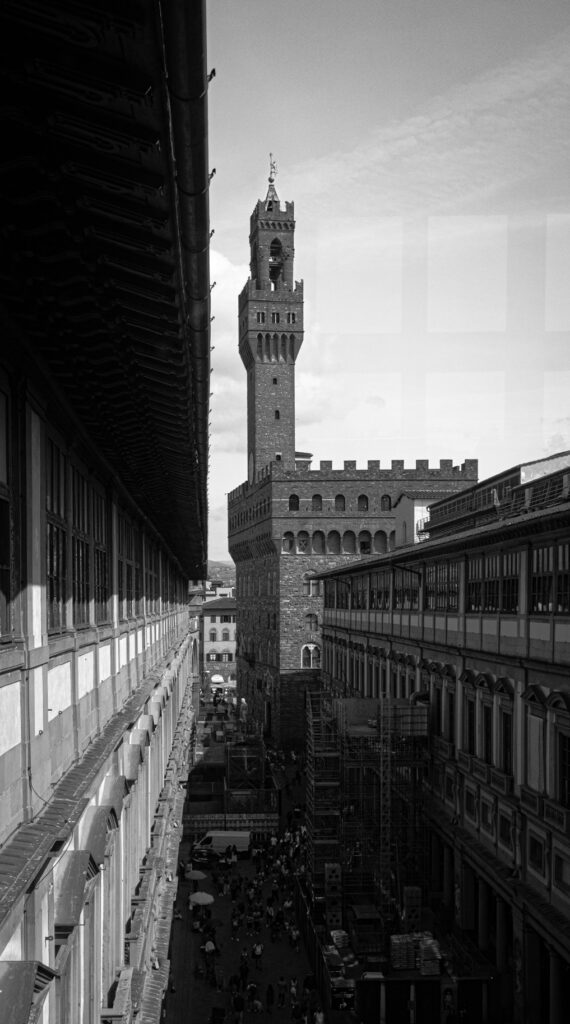
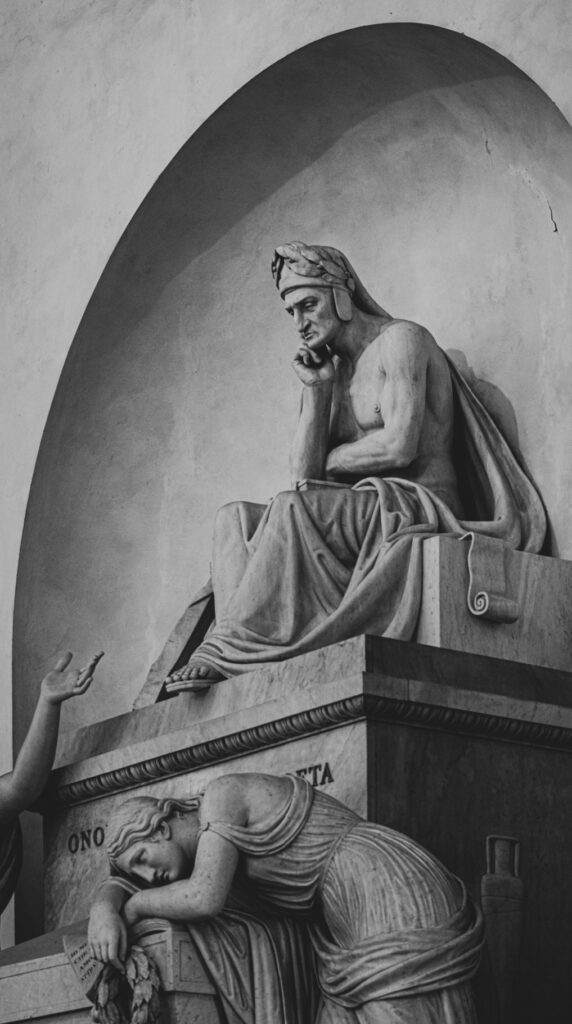
- Among the scholars of that time, the Conception of a spherical earth long establishedDante could also have taken the spherical form as a tribute to the ancient cosmological world view. Despite the emerging renaissance, the cosmological basic assumptions of Dante remain in the nucleus of late medieval scholastic and antique mediation. Thus, the idea that in the Middle Ages the idea of a flat earth disc was widespread is erroneous.
In his Divine Comedy, Dante locates purgatory in the southern hemisphere as “Against Mount,” which, depending on the world view and political outlook, does not seem too far from the socio-economic realities of the “global south”, and reminds us of the North-South asymmetries that still exist today.
The actual explosive power only arises about a century later due to the Copernican heliocentrism (sun in the center), which then gains a political-theological dimension with Galileo’s house arrest in the 17th century. ↩︎ - That Dante is, of all things, Virgil (Publius Vergilius Maro, 1st century BC) as “guides of the journey through hell have chosen, was above all because the Roman poet was considered to be a model for him classical poetry and standard of human reason. Virgil brought Dante through hell, but not to paradise, where divine grace and faith are decisive. ↩︎
- Dante’s drop in the “Inferno” is primarily due to Individual forms of debt like betrayal and other vices tied to abstract administrative mechanisms. At the same time, he has a sharp institutional critique of papacy, the purchase of office and the abuse of power. In this respect, it seems to him – from my point of view – secondary also to systemic criticism; his texts read like caricative accounts with his contemporaries, which he writes into hell. ↩︎
- Criticising is not control as such, but cumulative multiple protection: when testing, checking and replay pile up, detectability becomes an end in itself. ↩︎
- This is the construction manager of the AN (contractor), i.e. the executing construction company, as a function point that bundles the performed services internally and transfers them into a billing process. Depending on the size of the company and the construction site organisation, polishers/pre-workers (power intake on site) and a calculator/measurement engineer (position assignment) can participate; for the argumentation, this intermediate stage is summarized as a common “hell circle”, which mediates between the executing hand and the downstream test sites. ↩︎
- As regards classification: “Construction monitoring” Here the technical control of the performed performance is meant – i.e. the check whether quantity (measure/approach) and quality of the execution correspond to what was planned, advertised, commissioned and finally billed. Depending on the trade, this test typically takes over architects (construction from shell construction to interior construction) or engineers (technical trades). “Basic performance” denotes the minimum scope of the HOAI (honorary regulation for architects and engineers), i.e. not an additional special examination, but the core of contractual responsibility. ↩︎
- “Multipurpose” is mainly a result-oriented Added value for the building Many steps are systemically understandable, but they grow in total beyond what ultimately comes as architecture, durability and utility. The basic idea is that funds are often better invested in the craft, value-added, material production of the building than services and ancillary costs. ↩︎
- Standards Control Board Baden-Württemberg: Relieving bureaucracy and construction costs by optimising fire protection. Recommendation report of the Standards Control Board Baden-Württemberg. Stuttgart: Standards Control Board Baden-Württemberg, 2021, p. 2. Online available at: https://www.normenkontrollrat-bw.de/ (last access: 30.12.2025).
Quotation: “Construction costs have increased considerably in the last 20 years. One of the reasons is the increasing complexity of preventive fire protection. Private and public builders, especially small and medium-sized enterprises as well as municipalities, complain about un-reliable fire protection requirements. These delay the realization of their construction projects and lead to significant cost increases. For special buildings and complex conversions in the inventory, we have often found that above all the Preventive fire protection increased costsTherefore, the Standards Control Board has been intensively concerned with the question of how to reduce costs by cutting red tape. In doing so, it was important to us that we adhere in any case to the high standard of fire protection that we have achieved in Baden-Württemberg and not endanger it. ↩︎ - Bundesverband Kalksandsteinindustrie e.V. (Press): Bureaucracies represent a substantial part of the construction costs. 31.07.2025. Available online at: https://www.kalksandstein.de/ (last access: 02.01.2026).
Quotation: “bureaucracy costs represent a substantial part of construction costs of up to 15%. In the construction sector, EY has identified an administrative savings potential of around 2.7 billion euros. The biggest levers are the standardization of regulations, process and content simplification, as well as the acceleration and digitisation of bureaucratic processes. The measures listed in the building study could save about 15 to 20% of the bureaucracy costs, which would reduce the total construction costs by 3%. ↩︎ - See footnote 8, p. 59. Minimizing personal risks as well as liability and personal responsibility, decision-makers would secure themselves, e.g. by commissioning second opinions. Some fire protection requirements, in order to be sure, would also increase beyond the normally required fire protection measures. Because a more pragmatic procedure would represent a cost advantage for the builder in doubt, but does not relativize the personal responsibility for the decision-makers in the approval authorities. Consequently, the fire protection requirements of the building law authorities would in many cases exceed the normally required standards. Pragmatic deviations and compensations from fire protection requirements would often not be approved.“ ↩︎
- Cf. Fußn. 8, 6. 59. – Quotation: “This example impressively shows that licensing authorities in the field of fire protection no longer accept conventional standards and increasingly strive for 100% safety. Because construction law officials want to make sure that they are not personally prosecuted by criminal or civil law. ↩︎
- See feet. 9 ↩︎
- Building links (editor): DIN introduces cost assessment for building standards, 13.11.2024. Available online at: https://www.baulinks.de/ (last access: 02.01.2026).
Quotation (Klara Geywitz): “Norms in construction make life easier for the time being. Something has been tested, evaluated and categorized. However, if there are too many, private builders quickly feel overwhelmed by them. In addition to inviolable safety standards, the cost assessment should help to show clearly: Do I need this or not? DIN standards are norms that the economy sets up, not the state. Evaluating costs increases economic efficiency. We are now on our way to thinking about building differently, in terms of size, soil, climate and after-use aspects. Thinking again will take time, but it is important that such test parameters such as the cost estimation, legal certainty through building type E and digital models of houses, in order to be able to adapt the four walls to their own life requirements. ↩︎ - Material price increases are another important topic which would be the subject of a separate study because energy policy issues (higher producer prices) and education policy questions (deficit of skilled workers) as well as labour law issues (minimum wages) play a part in material price formation. In the context of the focus of this essay, it must be noted that the burden of bureaucracy also has an influence on material prices because the costs for proof, documentation, approval, traceability and additional quality controls are transferred to the product. An example from the pharmaceutical industry makes it more clear: commercial drugs are distributed there at higher prices in order to counter-finance research and development. ↩︎
- Brunner, Markus: What role do standards and standards really play in building costs? (Guest contribution), in: B_I baumagazin (bau.bi), 14.02.2025 (updated 13.10.2025). Available online at: https://bau.bi/ (last access:) 02.01.2026. – Quotation: „In standards are knowledge and experience – this can avoid errors, which reduces construction costs. In 2022 the error costs in the building industry amounted to gigantic 43.1 billion euros! A study by DIN and DKE shows that the correct application of standards could reduce this sum by around 16.5 billion euros.
Standardization makes products interchangeable with each other. This means that users are no longer bound to a specific manufacturer or supplier, as different suppliers produce products in accordance with the same standards. This creates healthy competition. Manufacturers must continuously strive to offer better quality and cheaper products. In addition, this competition often leads to innovations and efficiency gains in production. The possibility of combining construction products from different manufacturers not only facilitates planning and logistics, but also reduces overall construction costs as builders can benefit from competitively cheaper prices. Thus, standards contribute significantly to increasing transparency on the market and making investments in construction projects economically more attractive. ↩︎ - “Don’t trust statistics that you haven’t forged yourself—a well-known bonmot often attributed to Winston Churchill. Of course, such and similar country comparisons are definitional, but even taking into account distortions caused by other methodological approaches and methodological leeway remains the finding of a high specification and ancillary cost burden in Germany. ↩︎
- Online editors: Construction costs are highest in Germany (Europe comparison), 11.12.2023, 12:00. Available online at: https://www.haufe.de/ (last access: 31.12.2025). ↩︎
- PROJECT real estate business: When is a house an old building – criteria & definition, 09.03.2025. Available online at: https://www.project-gewerbe.com/ (last access: 01.01.2026). ↩︎
- See feet. 18 ↩︎
- See Warkus, Matthias: Old building or nothing: why many think that there is no way past the floor and stucco, Krautreporter, 04.03.2020. Available online at: https://krautreporter.de/ (last access: 26.12.2025). ↩︎