
← back to the “Publications” overview
No one sees it. But when a person dies, something seems to leave the room. Back there remains a silence of peculiar gravity. Once a doctor of the New World put dying on the scales to measure the weight loss at the moment of death. Twenty-one grams, he claimed, weighed the soul. In fact, only a few kilograms of bone remains, a name remain on stone and a file entry.
Man wants to structure, sort and systematize even the immeasurable. For graves square metres, fees and periods of use are set. Where faith promises eternity, the administration grants rights to time. Cemeteries need rules; the city has to manage with finite space. Thus death gets a different weight: not in grams, but in deadlines and formulas, paragraphs and parcels. So what does death weigh in a society that has lost its religious language? Who decides how much space the dead claim among the living?
If you die in Germany, you’re moving into time. Nobody buys a piece of eternity here, you rent parcels. In Berlin the contract expires after twenty-five years, in Hamburg after twenty-five. If the deadline has passed and no one pays, the next moves in – the ground is reoccupied, completely without the old having to make room. Eternal silence, subject to extension in due time. The bureaucracy poured the forgotten into deadlines.
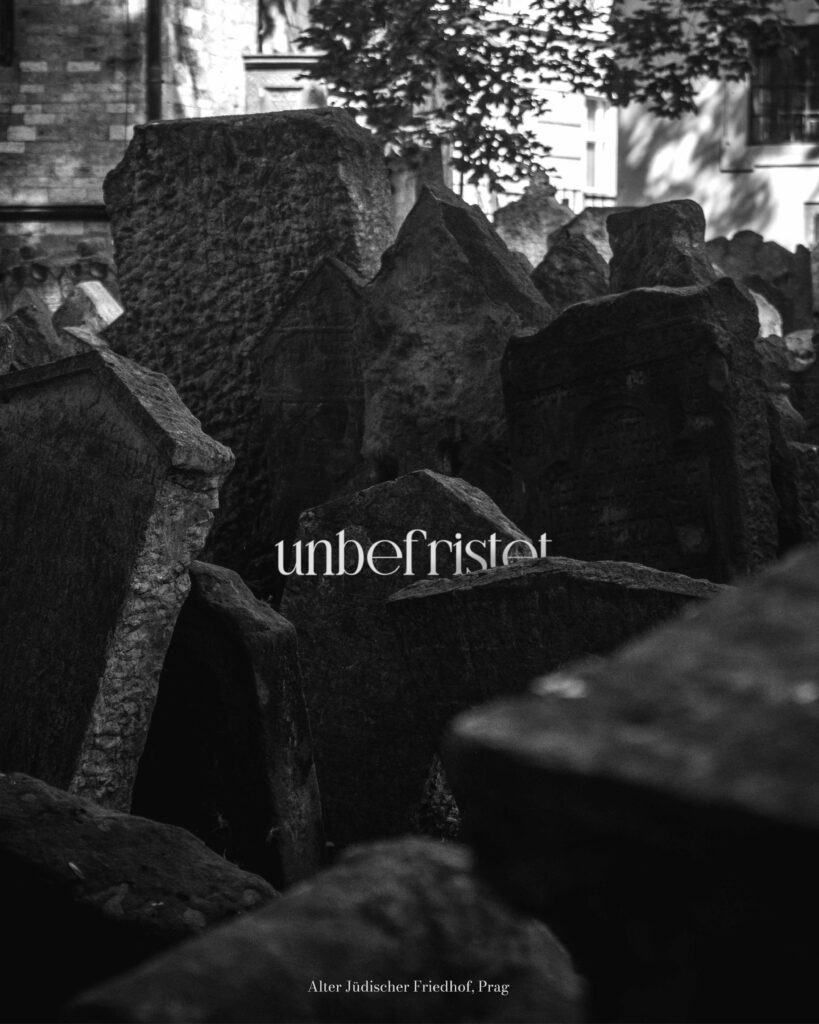
The Jewish cemetery “Holy Sand” in Worms shows how different permanent dead rest can look. Its oldest preserved gravestones date back to the eleventh century. Around two and a half thousand stone witnesses carry inscriptions from almost a millennium. Since 2021 it has been part of the UNESCO World Heritage Site as part of the SchUM sites. Its graves have survived wars, plagues and expulsions – almost a thousand years against forgetting.
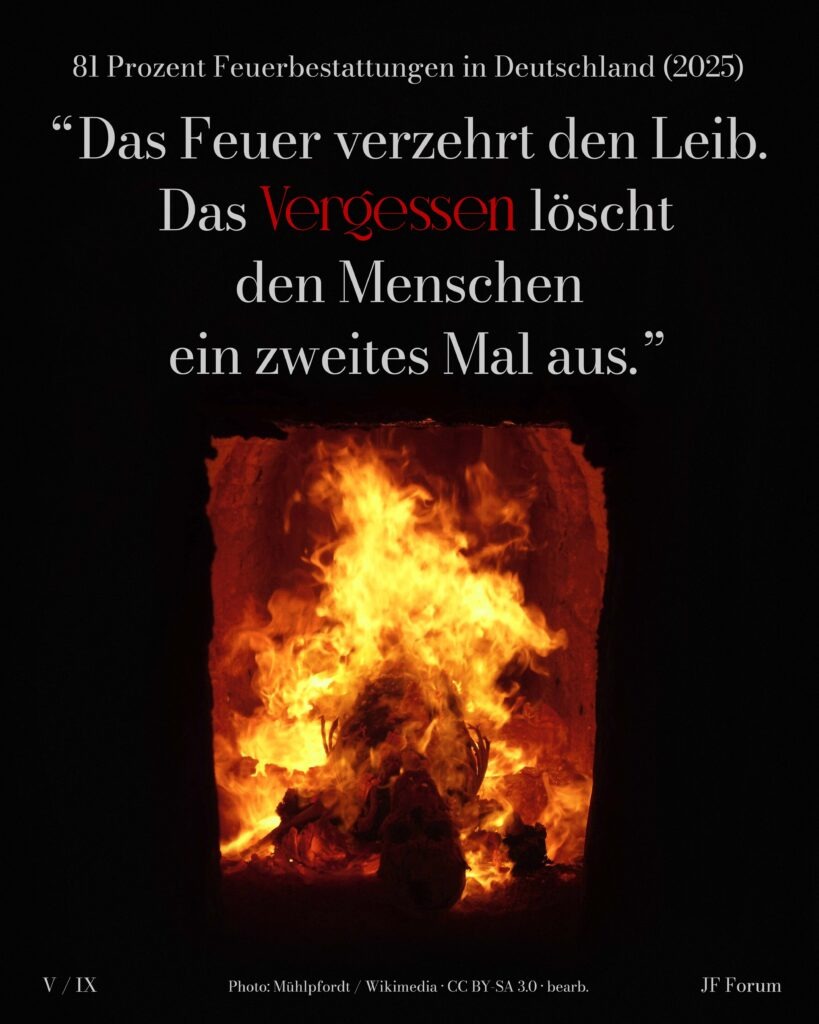
But how we build and appease not eternity, but the idea of the living decides on life after life. This idea has changed radically: classical burial of the earth has become an exception. In the old Federal Republic of the sixties about one in ten was cremated, after reunification only one in three. In 2025, according to the goodness community, there were eight out of ten cremation plants; in the east more than in the west.
The place of commemoration is also changing. According to a survey by the consumer initiative Bestattungskultur, within twelve years the desire for classical coffin or urn graves was halved to one quarter. Many prefer the burial forest: trees instead of gravestones, nature instead of enclosure; grave care is not necessarily lacking. This does not necessarily show less grief, but a different relationship between empathy and economy. Those who want to spare their relatives costs and burial care can dispense with a traditional grave precisely because of care.
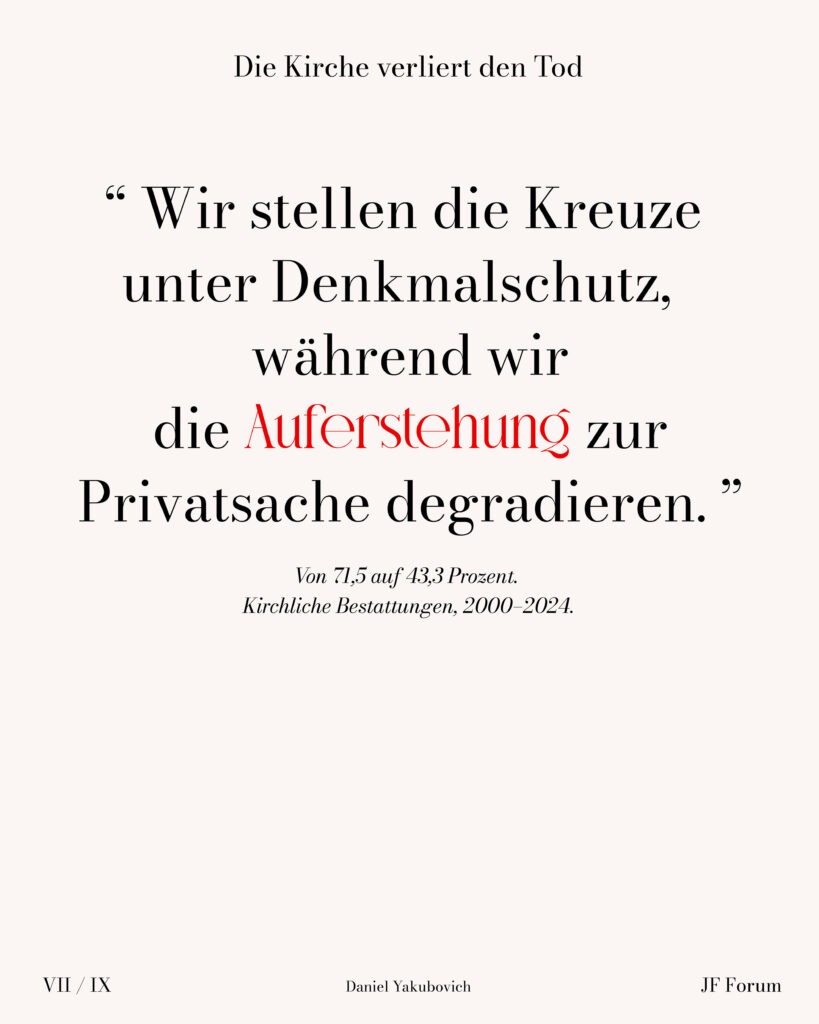
The church framework also loses its self-evident nature. In 2000, 71.5 percent of all the deceased were still buried in Protestant or Catholic burials, but in 2024 it was only 43.3 percent. Cremation is no proof of loss of faith: the Catholic Church allows them post-conciliar unless it is done by rejecting the content of the faith.
The border between the memorial site and the living room is also disintegrating. In Rhineland-Palatinate, the ashes of deceased people can now be placed on their own shelves, carried as diamonds on their fingers or handed over to the river.
What begins in the private sphere largely changes the geometry of our cities. The question of how much space the dead claim is not only raised since the liberalisation in Rhineland-Palatinate. In Berlin it became already 2006 for urban planning: Because the need for space had decreased considerably since 1980, the Senate adopted a cemetery development plan in 2006. Of that 1,037 hectares of burial area – about 1,400 football fields – one quarter was supposed to be predominantly in green areas and other uses.
We argue over every square meter of living space, but the cemetery becomes the remaining part of the spatial planning. The Gottesacker is not a dump, but a test stone of our human image. Anyone who only measures it according to deadlines, areas and fees taxis the dignity of man with the calculator.
The city planning calculation in Berlin looked simple at first: sinking graves, less space needed. However, the demand developed differently: while the cremation increased, the need for Muslim burials grew. The aging generation of immigrants sets new requirements. Those who found a home in Germany over decades want to find their last resting place here, instead of being transferred to their country of origin.
This is why in 2023 a former urn cemetery for Muslim burials was remodeled in Berlin-Wedding. Existing urn graves are supposed to give way to new earth burials after the expiry or limited extension of their rights of use. Ash leaves the body. Since 2025, the districts may also deviate from the cemetery development plan and use previously abandoned burial areas again. A city, which declared its Gottesacker as a run-out model, must now again donated graveland.
The question of eternal rest is not a purely ground question. In Judaism, the rest of the dead is considered a high good. In Islam, the rapid burial with orientation to Mecca follows washing and prayer of the dead; Muslim legal traditions judge differently about a reoccupation. Christianity promises the resurrection, but does not demand eternal inviolability of every grave.
But the death rest has its tariff. How much can it cost if the money is missing? Up to the Federal Social Court, the administration argued about the desire of a Jewish man and his non-Jewish wife to lie side by side even in death – a wish that, because of religious requirements, cost twice the usual official fee. Love extends beyond death. The bill goes up to the Federal Social Court.
Belief, purse or public duty – what determines the dignity of a funeral? The Social Code does bear unreasonable costs, but what is unacceptable in case of emergency is no longer the cheapest choice.
Modernism has not abolished death. It has declared it a private matter. The state can guarantee burial and set rest periods; it does not create a community that commemorates its dead for generations. Where memory is left to the family, it may be dried up with the last of them. It is not cremation that is the break, but the loss of a bond that should extend beyond the living.
If you want to understand what is at stake with this bond, you must look at the rooms that emerged from it. The medieval churchyard lay in the middle of the church. The dead were buried around the church, sometimes also in it. The dead remained present in the everyday life of the living. Only the hygiene of the Enlightenment drew a new limit: the Prussian General Landrecht of 1794 urged burials from churches and inhabited urban areas. The cemetery wandered outside the gates. Faith did not disappear with this, but its place in daily life changed.
With the cremation a new building task was created. In 1878 the first German crematorium in Gotha received the robe of antiquity: temple gables, columns, colonnade. The furnaces were new, the language of architecture thousands of years old.
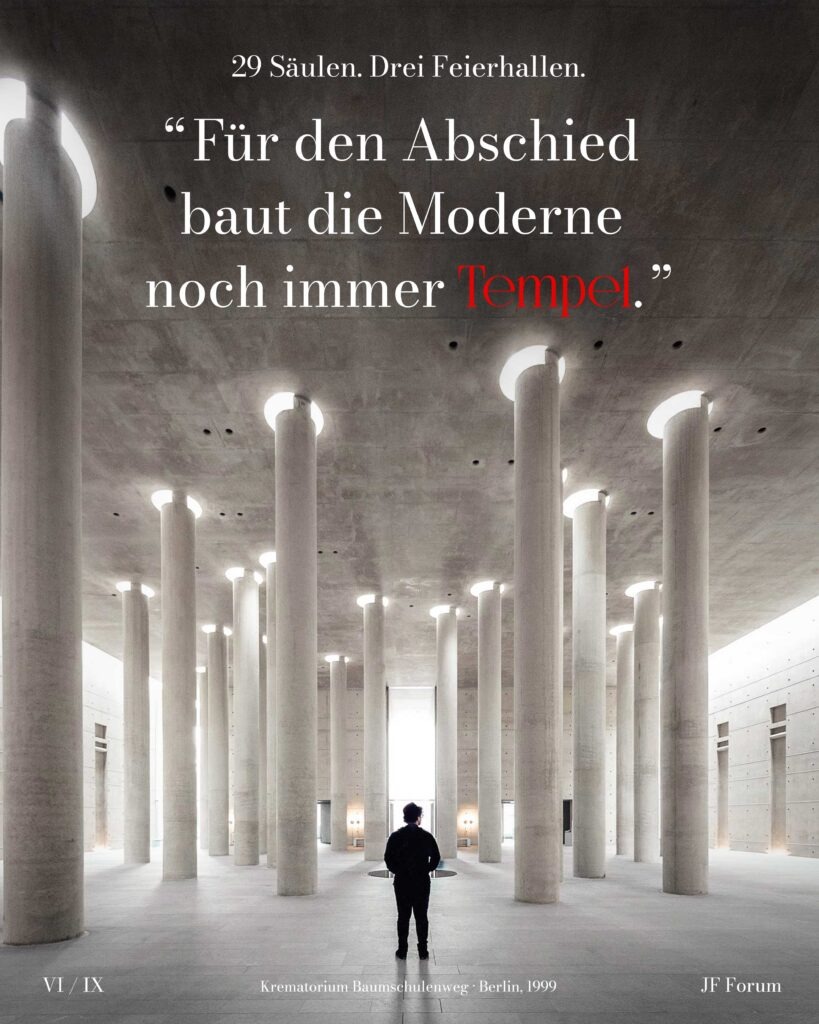
The crematorium Baumschulenweg by Axel Schultes and Charlotte Frank, the architects of the Federal Chancellery, is still further on. Behind the concrete facade there are 29 filigree columns whose capitals light inhales; a water basin collects their reflections. Three halls border the large hall, below which are the ovens. Schultes referred to Egyptian temples and the spatial effect of a Maghreb mosque. While the technique works below, mourners gather up like under an artificial starry sky. Modernism has technically conquered the fire. For farewell, she still builds temples.
The evangelical Emmaus Cemetery in Berlin-Neukölln shows how differently lived faith determines the space. There, around 500 Muslim graves are diagonally linked to the previous network of paths, because the deceased are aligned to Mecca. In addition, there were facilities for Muslim farewell rituals. Temples and mosques are architectural models in Baumschulenweg. In Neukölln, faith itself determines where the dead look. One is design, the other lived commandment. The form can be built, the faith cannot.
A late friend and architectural teacher had dedicated his life to building and preserving, including places of remembrance. I was able to take over his specialized library: works on synagogues, cemeteries and memorials, from which thoughts and buildings had grown up for decades. Now he himself needed commemoration.
Since then, my shelves have had meters of bound thoughts, designs and studies that he has collected for decades. You can inherit his library of literature, but not his curiosity. You can put a book on the shelf, but it doesn’t replace the person who leafed in it. Architecture can do much: it gives space to encounters and the mourning figure. But it cannot hold the hand that is missing. A void remains that no architecture can fill.
What is called in the small estate is called in the Great Cultural Heritage. Since 2020, cemetery culture in Germany has been part of the list of intangible cultural heritage. Churches are restored, monuments are protected, church courts are maintained. But a restored cross is not yet a confession. Monument protection protects forever the mortar – not the soul.
We place the crosses under monument protection while we declare the resurrection a private matter. A church that cultivates the stone and forgets the promise carries its faith itself to grave.
The Christian response to the isolation of death lies neither in longer periods of rest nor in new cemetery buildings. A church that prays for its dead sees in them not only an abstract past, but souls whose history is not completed before God. Therefore, their remembrance does not necessarily end with the last loved one. Faith cannot be poured into concrete. A necessary recristicization is not a return to the old cemetery order, but the renewal of a community that lives out of the hope that death does not have the last word.
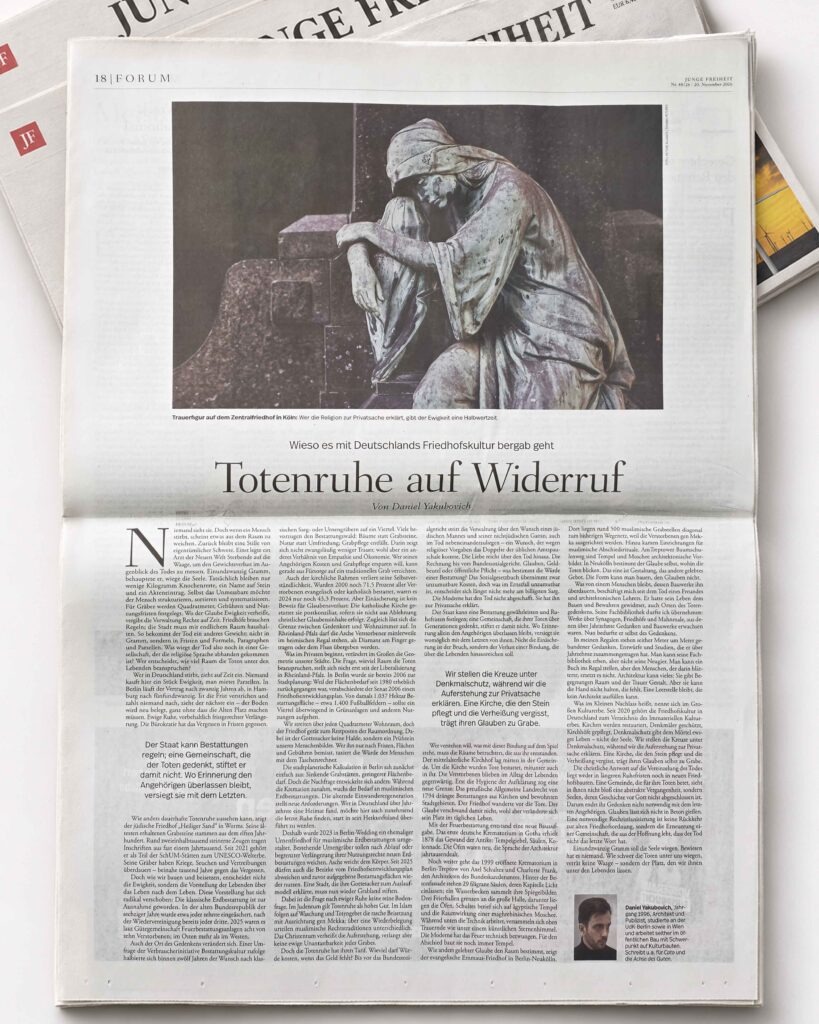
Twenty-one grams have not been proved to be the weight of the soul. Nevertheless, how heavy the dead weigh among the living is shown – not on the scales, but in what place we leave them.