
A Letter to Those Who Come After

Death to the occupiers! For the Fatherland!
Editorial Note
The following text is a literary reconstruction in the form of a fictional first-person letter. It is based on genealogical documents, family traditions and historical retellings. This German version is neither a historical audio recording nor a faithfully preserved letter, but an attempt to approach a possible voice of this person.
Statements by my great-grandfather preserved verbatim, together with passages from his wife’s memoirs and the recollections of his son, my grandfather, are identified individually in the text. As authentic testimonies, they are intended to remain distinguishable from the reconstructed and literarily shaped passages.
Source Note
The text adopts a literary first-person perspective. Statements preserved verbatim and passages closely based on sources are identified by superscript sigla. These refer to the respective layer of testimony or documentation on which they are based:
ᴬ autobiographical information provided by Simon Yakubovich
ᴳ recollections of his wife Gita Kreynina
ˢ recollections of his son Gregor Yakubovich
ᴰ archival, genealogical or historical contextual sources
Passages without a specific marker should be understood as literary reconstruction. The sigla are intended to distinguish between transmitted statements, documentary foundations and narrative approximations without interrupting the flow of reading.
I. שטעטל — /ˈʃtɛtl/ — Shtetl
I was born on 16 August 1911 in the settlement of Chotimskᴬ, in the Mogiljow Governorate of the Russian Empireᴰ . Before the October Revolution my father worked as a Jewish teacher and died in 1913; my mother worked as a day laborer in the town of Chotimsk and continued this work after the revolution until 1919.ᴬ
I had and have no convicted relatives, no politically disenfranchised relatives, no persons deprived of voting rights1 or other repressed elements in the family. I have a brother, Salomonᴰ, who works in Tschernigow as chairman of an artisanal producers’ cooperative, is a member of the KP(b)B and is currently working in Western Belarus. I have not had, and do not have, any disciplinary penalties either within the Party or at state level. In Party work, I am a member of the Party committee of the RWK and the elected chairman of the Kostikowitschi District Committee of the KP(b)B.
Returning to my own life, I myself started school in Chotimsk at the age of six and attendedᴰ it until 1924, completing six grades of the seven-year school.ᴬ
My motherᴰ worked from 1919 to 1922 as a cleaner in the district trade union council (Raiprofkowet)2 of Chotimsk, from 1922 to 1925 in the canteen of the Chotimsk Ministry of Transport3 and from 1925 to 1929 as a cleaner in the district union.4 In 1929 she was placed on a Strachkassa pension on grounds of age and disability and was then living in the town of Tschernigow with my brotherᴬ, receiving her pension from the insurance fundᴰ.
In my childhood I was a Komsomol member, and I took an active part in the social and political life of the district.ᴰ In 1925ᴬ, when I was about fourteen years oldᴰ, under a trade union agreement I entered employment as a maker of shoe uppers5 with a private small-scale tradesman6 , where I worked until 1926. And from 1926 to 1929 I continued the same workᴰ in the labor collective7 of shoemakers in Chotimsk as a maker of shoe uppers.ᴬ Also in 1925 I wasᴰ admitted to the LKSMB as a workerᴬ, and with that my Komsomol and social activities began. Later I was aᴰ member of the bureau of the Kostjukowitschi District Committee of the LKSMB (the Leninist Communist Youth League of Belarus)8. In 1937 I joined the KP(b)B9 (the Communist Party of Bolsheviks of Belarus) as a candidate, and in 1939 I was admitted as a member of the WKP(b)10 (All-Union Communist Party of Bolsheviks).ᴬ

II. אַרבעט — /ˈarbɛt/ — Work
In 1929 I joined the Chotimsk credit cooperative as a trainee, where Iᴰ worked until 1930 as a trainee11 in the credit cooperative12 of Chotimsk.ᴬ
In 1930 I wasᴬ, at the age of 19,ᴰ elected chairman of the District Committee of the Union of Soviet Trade Employees13 and deputy chairman of the Chotimsk District Trade Union Council of Soviet Trade Employees, where I worked until 1 May 1931. In connection with the abolition of the salaried post14 in the District Trade Union Council, I was transferred by the District Komsomol Committee to the post of financial inspector in the District Finance Department15 of Chotimsk, where I worked until the dissolution of the Chotimsk district16.ᴬ
Following the abolition of the salaried post in the District Trade Union Council, I worked from 2 May 1931 as a financial inspector in the Chotimsk District Finance Department, andᴰ by decision of the liquidation commission17 I was appointed senior inspector for state revenues18 and deputy head of the District Finance Department of the district19 of Kostjukowitschi, where I worked until 19 February 1939. I was appointed manager of the Kostjukowitschi branch20 of the State Bank21, where I worked until the outbreak of war.ᴬ
In 1932 I married Gita Kreynina, whose patronymic was Berkovna. Just two years later, on 8 February 1934, our eldest son Gerassim was born in Kostjukowitschi.ᴰ
That same year, 1934, at the age of 23, I began attending secondary school in Kostjukowitschi in the evenings alongside my work, and in 1935 reached the second year of the Finance Instituteᴰ; later, between 1937 and 1939, I became a memberᴬ of several central elected bodiesᴰ, namely the plenum of the Central Committee22 of the Union of Finance and Bank Employees23 in Minsk, and in 1937 I was a member of the bureau of the Kostjukowitschi District Committee of the LKSMB (Komsomol).ᴬ
III. חשבון — /ˈxɛʃbn/ — Accounts
My service in this capacity began in February 1938. It was a decisive year for Kostjukowitschi—the locality was officially granted town status in Mogiljow Oblast. By decision of the District Party Committee I was transferred here as manager, having previously worked as an inspector for state revenues in the District Finance Department. Taking me from the Finance Department was a logical step: the system valued reliability and the ability to translate columns of figures into the reality of the planned economy, rather than abstract diplomas.ᴰ
One must not imagine this as a “bank” in the modern, private sense. We were the district’s nerve center. The entire circulation of money passed across my desk. We were the point where state planning met the harsh reality of production. Our district had four machine and tractor stations (MTS), 117 retail outlets, 11 savings banks and a dense network of postal and telegraph services.ᴰ
This generated a massive turnover of cash. As manager, I held all these hubs together. Since the credit reform of the early 1930s, the logic had been relentless: commercial credit was replaced by direct bank loans. I was responsible for ensuring that enterprises—from the flax mill to the industrial combine—remained liquid, but strictly according to plan.ᴰ
My daily struggle was discipline and control. In a sense, I was the hinge in the great machinery of the state, and as long as my balance sheets added up, the system remained stable. The working day was divided into four major blocks that left no room for carelessnessᴰ:
First, I supervised the administration of all organizational accounts. Every debit, every attachment had to be legally watertight. We did not act “on someone’s say-so,” but according to law.ᴰ
Alongside settlements and accounts, the cash desk and cash holdings formed an important part of my work: the security of the vault was my personal burden. I ensured there was enough cash for wages and business trips, organized the dangerous cash transports (collection) and supervised every seal and security seal. As so often, however, the most important task was always the most immediate: lending. That was the hardest part. Directors were constantly sitting in my office with their “plan on fire.” They begged for loans. If repayment discipline was inadequate, I had to prohibit disbursement—no matter how loudly the director cursed. My office demanded the precision of a Swiss clockwork, yet my everyday life sometimes resembled a cattle market where people tried to sell me flax for rubles.ᴰ
Revenues and taxes had to flow; defaults and discrepancies in budget payments would have had fatal consequences. Treasury execution was therefore the fourth pillar of my work.ᴰ
My daily routine was thus a mixture of meticulous bookkeeping and operational severity. In the morning I opened the vault according to regulations, reconciled the balances and checked the previous day’s reports. Then the stream of people began: an MTS accountant demanded cash for the machine operators; a shopkeeper apologized for late receipts.ᴰ
For this I needed the precision of a chief accountant and the toughness of a security chief. Every miscalculation was a potential emergency, every irregularity could be interpreted politically. At a time when financial offenses were quickly regarded as sabotage, discretion and managing one’s reputation were vital to survival.ᴰ
While I managed the branch, three tracks ran parallel in my life: my economic career at the bank, my position within the Party cadre and my military obligation as a politruk, a political officer in a Soviet reserve unit. These roles overlapped; my experience as a crisis manager and my loyalty also made me an organizer essential to the war effort should war come.ᴰ

IV. סדר — /ˈsejder/ — Order
Looking back, it is 1939 in particular that remains vivid in my memory. That year our son Boris was born. I felt especially clearly then that something had to change and that I could no longer remain in one placeᴰ: In that same year, 1939, I approached the Belarusian Office of the State Bank with a request to transfer me to the urban branch of the State Bank, where I could work while also securing proper treatment for my son, which was entirely unavailable under conditions in Kostjukowitschi. The Office of the State Bank promised to grant my request in the near futureᴬ, but the question of my transfer was never finallyᴰ resolved.ᴬ
Because I needed to move to the city for the reasons stated above, and knew that Bobruisk required a head of the City Finance Department, I agreed to move to Bobruisk to work as head of the City Finance Department24. After all, I knew financial work well, had repeatedly received bonuses for the good organization of the work of the Raifo and held two certificates of honor from the NKF of the BSSR for excellent work in the Raifo.ᴬ
Essentially, the matter had been decided and only required the formal paperwork, andᴰ […] a replacement in the Kostjukowitschi branch of the State Bank had already been prepared by me; at the same time I could thus have been relieved of my post as manager of the district branch of the State Bank.ᴬ
That same year I completed a six-month advanced training course for State Bank branch managers in Nischni Nowgorod, already sensing how much my work demanded not only professional discipline but also constant inner tension.ᴰ In my public activities I was a member of the plenum of the Central Council (ZP)25 of the Union of Finance Employees; for outstanding achievements in the field of state revenues I received two certificates of honor from the People’s Commissariat for Finance (NKF)26 of the BSSR. For the good organization of work in the State Bank branch, I received a commendation by order of the regional branch of the State Bank dated 28 September 1939, and furthermore, by order of the same regional branch dated 4 November 1939, I was awarded a bonus of 300 rubles for successfully fulfilling the task of reducing payment arrears27.ᴬ28
A year later, in 1940, our third son Grigorij was born in Kostjukowitschi, while my work was increasingly extending beyond mere official dutiesᴰ: That same year in Kostjukowitschi I was a member of the bureau of the Party committee of the RVK and chairman of the Audit Commission of the District Committee of the KP(B)B.ᴬ
I was about thirty years old, a reserve commander with the rank of senior lieutenant29. In the early summer of 1941 this duty took me, as a conscript from the assigned reserve personnel30, to military refresher training in Ossowzy31 in Brest Oblast. In those days before June, a disciplined calm prevailed in the offices of Kostjukowitschi as in the camps near Brest; when the TASS communiqué appeared on 14 June, rejecting rumors of a Wehrmacht attack as baseless provocation, it became the unquestionable guide for our actions.ᴰ
Nevertheless, there is a language of figures and subtle changes in administrative procedures that someone in my position knows how to read. Even before my departure, clear shifts were emerging between the lines of routine instructions at the State Bank as preparations for war were made—credit lines were tightened, reserves for extraordinary needs discreetly increased. This was an objective safeguarding of state holdings against every conceivable turn of events rather than an expression of unrest.ᴰ
A reserve officer does not ask questions about timing; he follows his call-up orders. There was certainly an electric silence in those days, the kind that arises when everyone knows his task but nobody speaks the obvious aloud. Until the last minute we worked as though peace would last forever—and at the same time prepared as though the unspeakable were imminent.ᴰ
That I would remain behind in the event of occupation as part of the civilian core of the underground was no contradiction; it was the fulfillment of duty to the Party and Fatherland that had placed their trust in us.ᴰ
V. מלחמה — /mɪlˈxɔmə/ — War
On 22 June 1941, the area of Brest Fortress held not only the troops permanently stationed there but also reservists from the 6th and 42nd Rifle Divisions of the 28th Rifle Corps of the 4th Army, border guards, NKVD units and other detachments. These were training camps near the border, in the shadow of the old citadel.ᴰ
As the morning of 22 June dawned, the camp became a slaughterhouse. The air above the still-warm beds was suddenly filled with the taste of burned metal and dry dust. We were under the Wehrmacht’s first, annihilating fire.ᴰ After the first fierce engagements in the fortress, I received an order. The garrison command set the task: I and eight others were to pierce the closing siege ring, break through to the division’s main forces near Grodno and report on the situation. Our departure was a clear combat mission.ᴳ
But I was fortunate amid the chaos: because I was in the suburban camp area rather than trapped behind the fortress’s thick walls, a narrow window for withdrawal opened for me.ᴰ
As the siege ring snapped shut around the citadel, I was able to escape before the enemy’s armored spearheads finally cut the transport arteries.32ᴰ
But the mission was already obsolete: on arriving at our destination, we found only the remnants of the formation—shattered by German armored spearheads.ᴰ Of the nine men who had set out from Brest, only three remained after this march. Faced with total destruction at our destination, only one course remained: we separated, each man on his own.ᴳ
My orders were to make my way to the Kostjukowitschi district and establish the prepared underground network there. That I was to remain behind enemy lines in the event of occupation—as part of the leadership core of the clandestine district administration—was beyond question for me. My experience in crisis management and my organizational talent had now found their true purpose: war.ᴰ
The road to Kostokowitschi was a march through a burning country. In small groups I made my way through the gaps between the German advances, always eastward, back toward home. I reached Kostjukowitschi in August, just as the region was occupied. By then the regional center of Mogiljow had already fallen at the end of July after a siege lasting several weeks.ᴰ
My remaining in occupied territory also fulfilled the prewar plan. As the towns fell and the occupation scenario unfolded for the region’s Jews—registration, forced labor and ghettoization—we pitched our tents and extended our planned structures. We were the administrative network that had remained behind according to plan: Manjko, the Party committee secretary, Tischtschenko, the head of the Agriculture Department, and I. Once the order of the town, we became the silence of its forests. We met for working discussions in the villages, often with Comrade Dolgatschow. It was about the logistics of survival and fighting behind enemy lines.ᴳˢ
With the first frost came rumors of mass executions of the Jewish population. They filtered through to us via courier services and hushed conversations in the forest hideouts. A messenger who had broken through to us from the regional capital brought news of the “Mogiljow Conference.” He sat by the fire, his hands trembling, although he was no novice in the field. He spoke of senior officers of the rear services, police commanders and ᛋᛋ men who had gathered there. It was no ordinary staff meeting. It was the technocratic fusion of murder and warfare. Under the heading of “anti-partisan warfare,” the annihilation of the Jews was to begin. There was no longer any distinction between a man who blew up a railway track and a child wearing the yellow star. The Jew was the partisan, and the partisan was the Jew.ᴰ
Near Mogiljow the fascists had staged a demonstration—a “demonstration shooting” before the assembled officers.33 They had led people to the pit like cattle. It was a methodical lesson rather than an excess. They practiced mass murder like drill on the parade ground. In early October the reports intensified. The pits at the Jewish cemetery in Mogiljow were being filled. Thousands.34
Anyone who still hesitated to raise a weapon had already signed his own sentence. We in the underground tightened our security precautions. We became colder. Silence became our most important tool because we knew that, if they caught us, we would die as teaching material for their next demonstration rather than as soldiers.ᴰ
VI. שווייגן — /ˈʃvajɡn/ — Silence
In the village of Maschewskaja we sought shelter with the Schandow brothers. One of them carried a Party card in his pocket, yet served in the collaborationist police.ˢ While we were there, they brought the captors into the house. It was a coordinated operation. Field gendarmes and local auxiliary policemen surrounded the cottage.ᴰ35
As the volleys cracked, we tried to flee. A bullet struck my leg. They arrested me and Tischtschenko.ᴰ Manjko escaped for the moment, but lead was faster. They would catch up with him later in Krasnopoleˢ and shoot him in a roadside ditch.ᴳ
We were taken into town, to the quarters of the Secret Field Police. Interrogation and torture followedˢ—thorough and systematic. A score of pain designed to force out names and hiding places. I remained silent. There was nothing to negotiate.ᴰ Tischtschenko was eventually shot. My fate was differentˢ; since I was known in the townᴰ, they intended to make a public example of meˢ. Hanging as a mark visible from afar. A slow, agonizing return home.ᴰ
On the day of the execution they brought me to the square. My family had already been evacuatedᴰ, my house was ashes, my possessions looted.ˢ The scaffold was ready, a skeleton of fresh timber. There was no farewell.
I stood above them. The noose was rough hemp, the air marked by a first frost that made warm breath visible. My bullet-shattered leg was only a distant heaviness now, a weight that would soon mean nothing. I looked into the crowd.
Then I gave my lungs one last command and shouted:
“For the homeland! For Stalin! Death to the fascists!”ˢ
Then the ground gave way.
VII. לופֿט — /luft/ — Air
The drop was short. A savage wrench into the vertical, then stillness. The coarse rope bit relentlessly beneath my jaw, fixing my head in an unnatural rigidity. The world narrowed. Blood backed up at the gates of my skull, a pulsating pressure against my temples. The fine, needle-prick cold of November that I had still felt on my skin moments before had become meaningless. My lungs labored in a void; they pulled against the rope. Limbs trembled without support. A complete overload of the senses. The radiating pain in my leg went out.ᴰ
A rushing filled my head as though a swarm were rising. A rushing like a thousand vermin, drowning out every soldier’s shout. My field of vision narrowed. Onlookers in the square dissolved into gray patches. Searing flashes and blazes of white light darted through the darkness of my eyes—the last signal before the pressure broke the nerves.ᴰ
Then heaviness and darkness prevailed. I surrendered my weight to the rope. The struggle was over. Only gravity remained. Consciousness sank away, leaden layer after layer, until all that remained was the heavy pendulum of my body growing lighter. A pendulum of flesh and coarse cloth that sounded like a wind chime in the cold. The silence was final.ᴰ
I fell home.

VIII. ערד — /ɛrd/ — Earth
My death was the final form of my duty rather than its end. My body had become the property of the occupiers, their instrument of deterrence made of skin and wood. But despite torment and torture, the information remained inside me. The lock was broken; the vault remained closed.ᴰ
Partisans took me down from the scaffold at night; they committed me to the earth. For three years I lay in the shame of a nameless pit. After the liberation, my wife returned home in August 1944 to emptiness. She came with a widow’s destitution and her duty toward our three sons. So that the sons would receive bread, she had to attest to my death. She searched for the place where I had been buried. Two of her pupils showed her the spot. She dug me out of the earth with her bare hands until her flesh found my bones.ˢᴳ
She lifted me out of the dirt. She gave me a final resting place in a memorial on the central square.ˢᴳ
There I lie now. The account is settled.



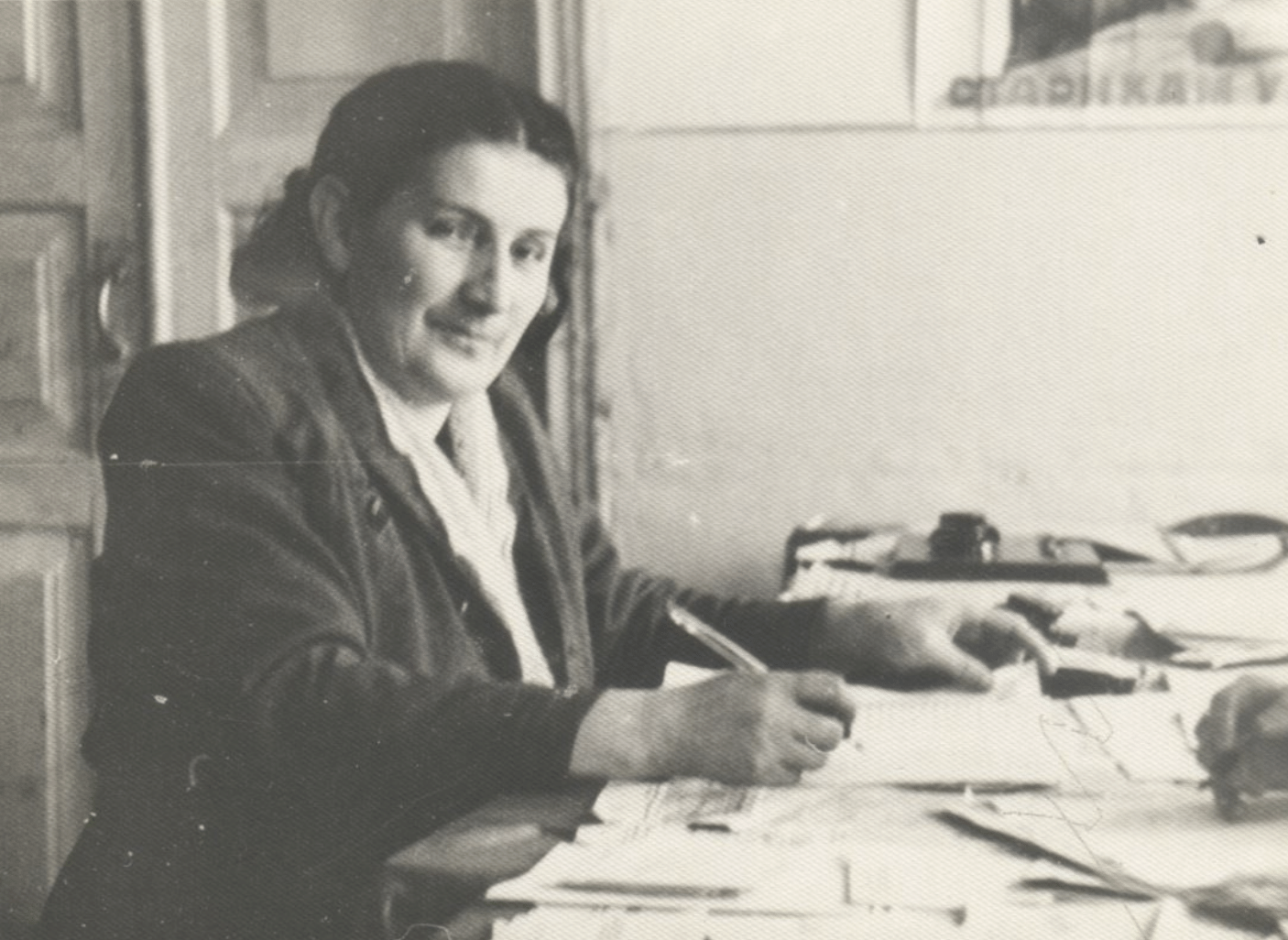
Letter to Those Who Come After
Gita Kreynina
1913 – 1998
To be continued…
- In Soviet usage, the term Lishenzy (Russian лишенцы, [lʲɪʂɨnˈtsɨ]; literally “the deprived” or “the disenfranchised”) referred to persons stripped of fundamental civil rights—particularly the rights to vote and stand for election—as politically or socially undesirable elements. ↩︎
- Райпрофсовет (Raiprofkowet): District Soviet of Trade Unions (regional trade union administration). ↩︎
- МПС (MPS): Abbreviation for Ministerstwo putej soobschtschenija—the Ministry of Transport (usually in connection with railway administration). ↩︎
- Райсоюз (Raisojus): District union of consumer cooperatives. ↩︎
- Заготовщик обуви (Sagotowschtschik): A specialized craftsman in shoemaking who prepares and stitches the leather upper before it is joined to the sole. ↩︎
- In Soviet usage of the 1920s, the term referred to a craftsman or small-scale tradesman who worked primarily from home or in smaller workshops. During the New Economic Policy (NEP), employment with private employers remained legal, but was subject to strict state regulation, particularly through collective trade union agreements. ↩︎
- Трудколлектив (Trudkollektiv): An early form of cooperative labor organization in the Soviet Union. ↩︎
- LKSMB: Belarusian branch of the Komsomol (Russian Комсомол, an acronym of Kommunistitscheski Sojus Molodjoschi). Founded in 1918, it functioned as the Party’s central organ for cadre development and indoctrination among adolescents and young adults aged 14 to 28, forming the organizational link between the Young Pioneers and Party membership. ↩︎
- KP(b)B: The Communist Party at the level of the Belarusian republic. ↩︎
- WKP(b): The overarching Union-level Party (later the CPSU). The suffix (b) stands for “Bolsheviks.” ↩︎
- Ученик (Utschenik): In the Soviet workplace and labor context, the term refers to an apprentice or trainee. It denotes people introduced to a skilled trade through vocational training (obutschenije) in manufacturing or commercial enterprises, usually in-house and practically oriented. ↩︎
- Кредитное Товарищество (Kreditnoje Towarischtschestwo): This was a cooperative credit and savings institution. In the late 1920s, these organizations provided credit to craftsmen, peasants and small collectives before the banking system was fully centralized. ↩︎
- Союз Совторгслужащих (Sojus Sowtorgsluschaschtschich): “Union of Employees in Soviet Trade and State Institutions.” This was an influential mass organization for employees in the public service and state commodity trade. ↩︎
- In the context of Soviet bodies, this means a full-time (salaried) position as opposed to unpaid duties. ↩︎
- Райфо (Raifo): Abbreviation for Rajonny finansowy otdel—the local financial authority at district level, responsible for taxes and budget planning. ↩︎
- Ликвидация района (Likwidazija rajona): Refers to an administrative territorial reform in which the Chotimsk district was temporarily dissolved or incorporated into another administrative unit (such as Kostjukowitschi). ↩︎
- Ликвидком (Likwidkom): Abbreviation for Likwidazionnaja komissija (liquidation commission). These commissions were appointed to wind up administrative affairs (personnel, inventory) when an authority or district—as mentioned above—was dissolved. ↩︎
- Инспектор Госдоходов (Inspektor Gosdochodow): An inspector for state revenues was responsible for collecting taxes, levies and other claims of the state. ↩︎
- Зам Зав. РайФО (SamSaw. Raifo): Abbreviation for Samestitjel Sawedujuschtschewo Rajonnym finansowym otdelom—deputy head of the District Finance Department. This was already a significant local leadership position. ↩︎
- Управляющий отделения Госбанка (Uprawlajuschtschi otdelenija Gosbanka): Manager or director of the local branch of the USSR State Bank. ↩︎
- Госбанк (Gosbank): The State Bank was the central financial organ of the Soviet Union, functioning as both a central bank and a commercial bank. ↩︎
- Член пленума (member of the plenum): This indicates a role in a high-level decision-making body (at republic level in Minsk). ↩︎
- Союз Финбанковских работников (Sojus Finbankowskich rabotnikow): The specialist trade union for employees in finance and banking. ↩︎
- Горфо (Gorfo): City Finance Department. ↩︎
- ЦП Союза (ZP of the trade union): Zentralny Sowjet—the Central Council. This was a role at a high political level, extending beyond the local sphere. ↩︎
- НКФ БССР (NKF BSSR): Abbreviation for Narodny Komissariat Finansow—the People’s Commissariat (Ministry) for Finance of the Belarusian SSR. ↩︎
- Снижение неплатежей (reduction of payment defaults): This was a critical indicator in the planned economy. It meant that he induced enterprises to settle their bills and repay loans on time, securing the state’s liquidity. ↩︎
- 300р. (300 rubles): At the time, this was a substantial amount, roughly equivalent to the average monthly wage of a skilled worker or junior office employee. ↩︎
- Старший лейтенант (senior lieutenant): In the Soviet military, this officer rank typically corresponded to the role of company commander or political officer (Политрук). In 1940–1941 such specialists had their own ranks, such as “Technical Intendant, 2nd or 1st Rank.” ↩︎
- Приписной состав (assigned reserve personnel): Civilians assigned to a military unit and called up for exercises. ↩︎
- Осовцы (Ossowzy): A locality near Brest, close to training grounds and airfields. It was a typical location for stationing reservists shortly before the outbreak of war. ↩︎
- Simch was apparently outside the citadel (training camp/rear services). The most likely route was therefore to march east on the morning of 22 June 1941 with withdrawing formations. Making his way through the forests in small groups is equally conceivable. Direct attempts to break out of the fortress—such as that of 26 June by a group around Lieutenant Winogradov (100–120 men)—were possible, but almost invariably ended in annihilation or capture (see the border chronicle: https://history.gpk.gov.by/, last accessed: 22.10.2026) ↩︎
- Following the occupation of Mogiljow in July 1941, Einsatzgruppe B and Higher ᛋᛋ and Police Leader (HSSPF) Erich von dem Bach-Zelewski immediately initiated the systematic persecution of the Jewish population. The reports cited refer to so-called “demonstration shootings” in October 1941: the ostentatious invitation of Wehrmacht and police officers was intended to normalize mass murder as a military necessity and systematically desensitize the perpetrators. Following the mass executions of 2/3 October (over 2,200 victims) and 19 October 1941 (approximately 3,700 victims), Mogiljow also served as an experimental testing ground for new killing methods (including gas vans) during the transition to industrial extermination. These events are documented, among other sources, in the Black Book by Wassili Grossman and Ilja Ehrenburg and in postwar Nazi trial records. ↩︎
- The ghetto in Mogilev, established on 13 August 1941, formed the starting point for a series of mass executions in autumn 1941. In the city of Mogiljow alone, two major operations in October claimed at least 5,999 lives (2,273 victims on 2/3 October and 3,726 on 19 October; see Yad Vashem). These developments encompassed the entire Mogilev Oblast, as comparative regional data show: in Bobrujsk, 5,281 Jews were shot near Kamenka on 7/8 November 1941 (see Semantic Scholar); in Klimowitschi, more than 900 people fell victim to the terror on 6/7 November (CJA Klimovichi); and in the Krichew district, approximately 336 victims were documented in autumn 1941 (CJA Krichev). ↩︎
- Feldgendarmerie: They served as the Wehrmacht’s military police and were often the forces carrying out raids in villages.
GFP (Secret Field Police): The “Wehrmacht’s Gestapo,” which specifically hunted resistance fighters and officials.
Schutzmannschaft: Local collaborators subordinated to the Germans. They knew the area and its people best—like the Schandow brothers mentioned in the text. ↩︎