Individual work / Commentary
Watercolour and mixed media · 2022
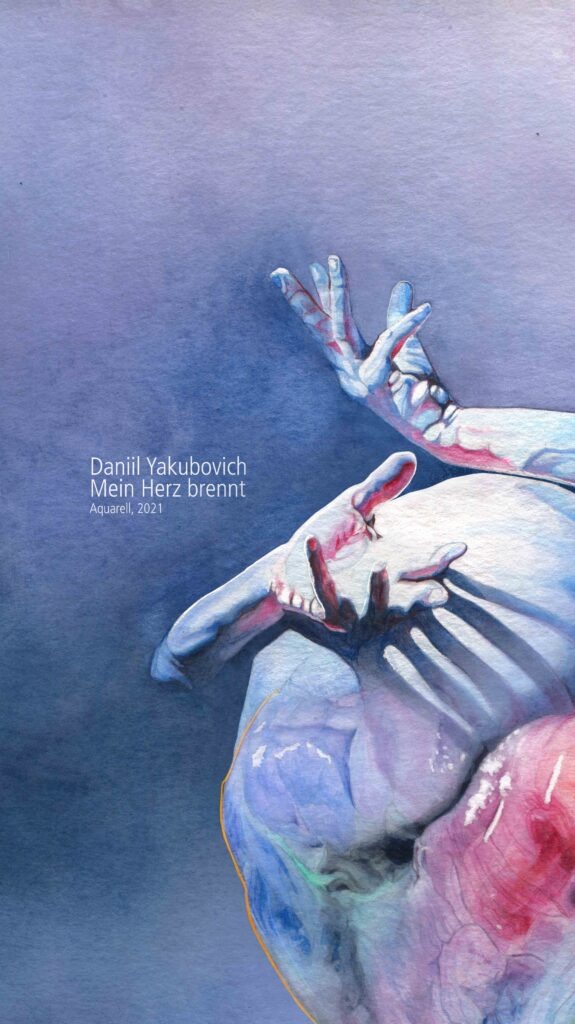
My Heart Burns, 2021
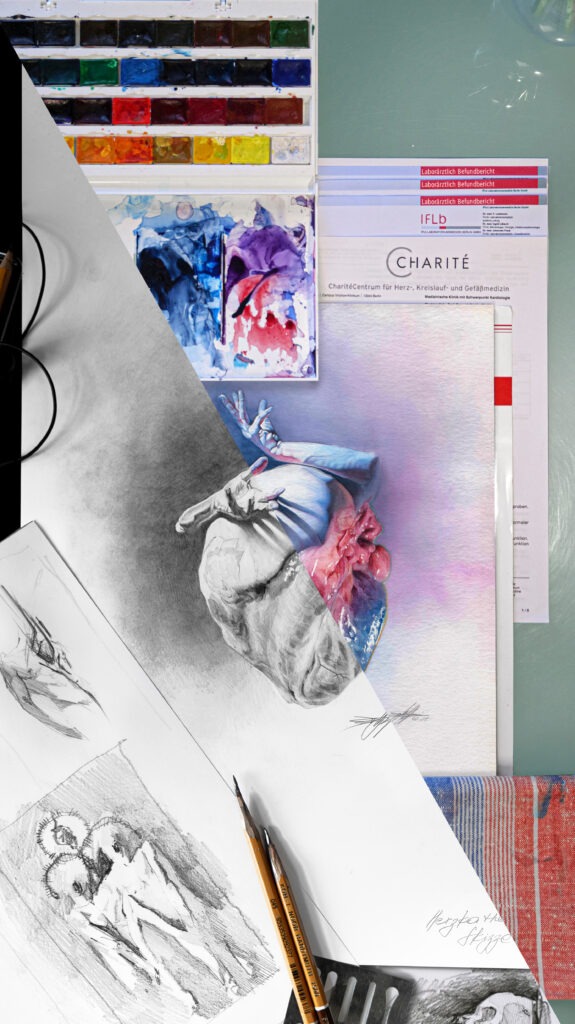
Mixed media: watercolour (“White Nights”, Nevskaya Palitra, honey-bound), my own blood, graphite and coloured pencil on Hahnemühle card, 40 × 30 cm (sheet)
Signed lower right in pencil on a watercolour ground; inscribed on the reverse
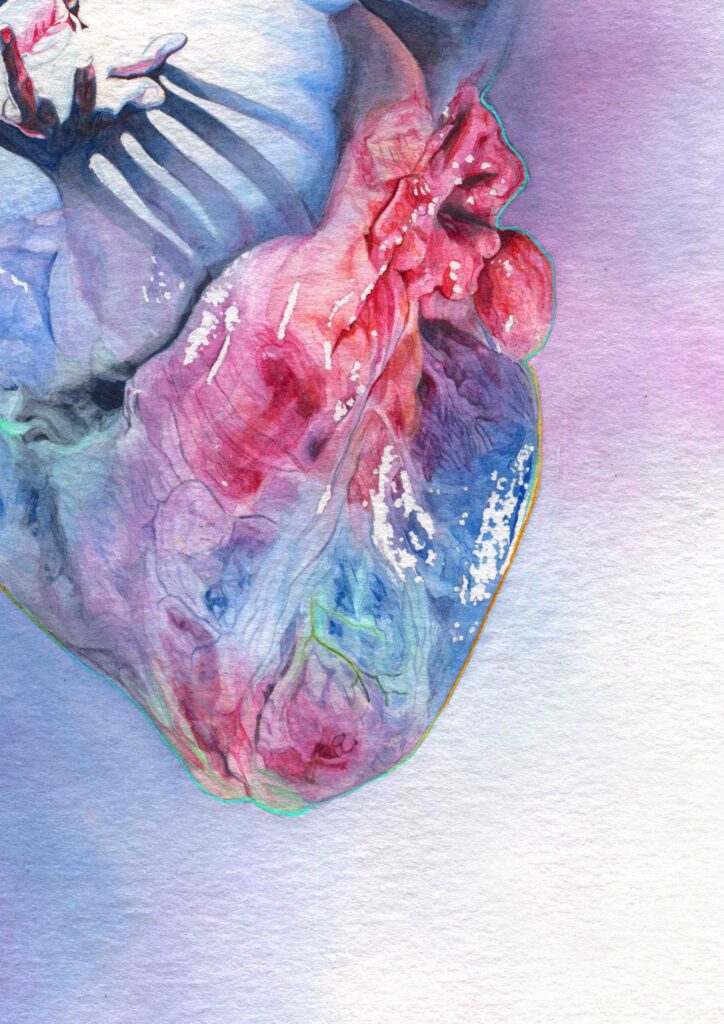
Depiction of an inflamed human heart following a diagnosis of subacute lymphocytic myocarditis; title after the Rammstein song of the same name
Inv. no. DY-2021-AQ-002
© Daniel Yakubovich.
The watercolour “My Heart Burns” (inv. no. DY-2021-AQ-002), named after the Rammstein song of the same name, is a meagre attempt to give form to an internal process that appears in the cryptic language of medicine only as a pale shadow of its symptoms. The word inflammation already carries its metaphor within it. The Latin inflammare means to set alight, to set on fire. What the language of medical findings and reports merely intimates returns in the image as heat and desolation. Patches of glowing embers permeate the heart muscle, to be read thermally rather than naturalistically. It is an approach to an autoimmune biochemical process that the dry language of the medical report cannot convey.
The choice of materials lends the watercolour symbolic weight. Honey-bound “White Nights” watercolours from St Petersburg were mixed with my own blood. A medium thus entered the image that had circulated through the inflamed heart muscle during the illness, carried inflammatory markers and also absorbed the cocktail of medication intended to contain the blaze. Blood as pigment is risky, however: chemically unstable, it darkens, oxidises and gradually loses its living red until it shifts into brown. It was therefore used sparingly.
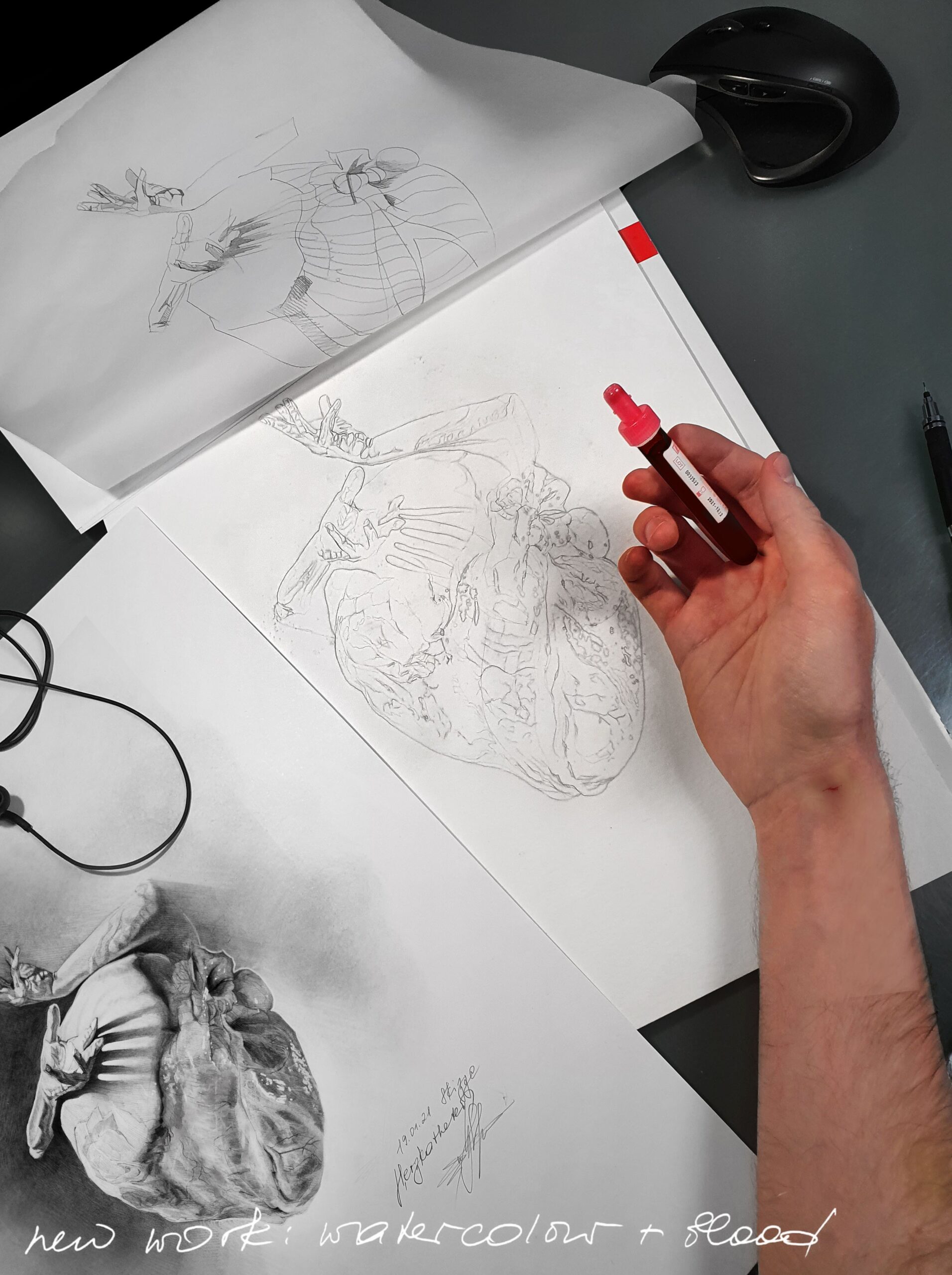
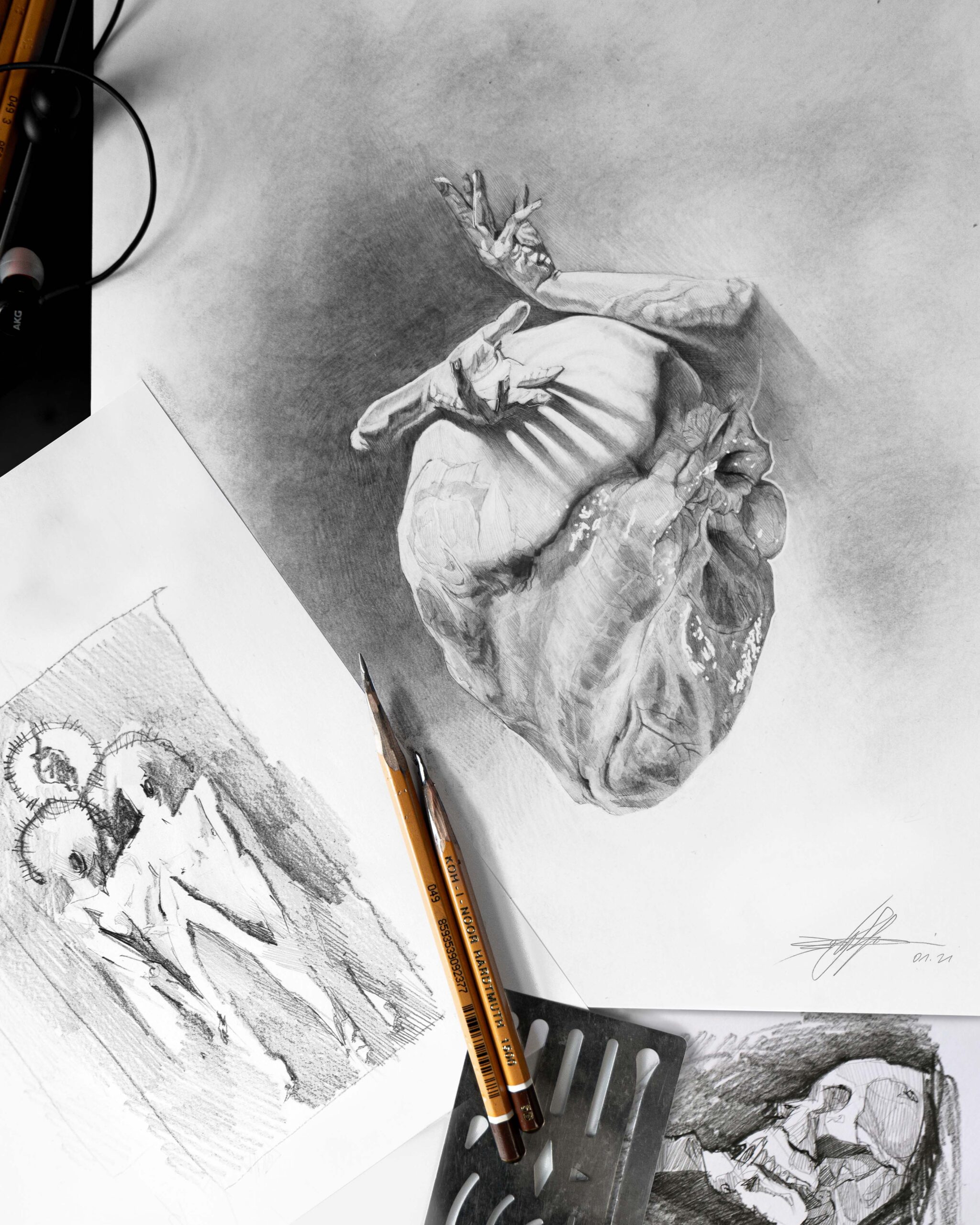
Nobody is healthy; at best, they have not been examined thoroughly enough. Diagnoses are a matter of thoroughness. Once the body has come under scrutiny, findings and reports accumulate, followed by medication, follow-up examinations and monitoring. This bureaucracy of wasting illness almost inevitably turns a person into a case for treatment. What is individual in an illness is translated into the measurable; the body is stabilised, monitored and treated according to protocol. The work belongs to an attempt to wrest a form from these processes. It is equally an attempt to transform a pathological process from the passivity of suffering into the activity of making.
The image opposes illness with form. Sometimes recovery begins not only when the readings return to normal, but when illness can be made to yield a human, all too human form.